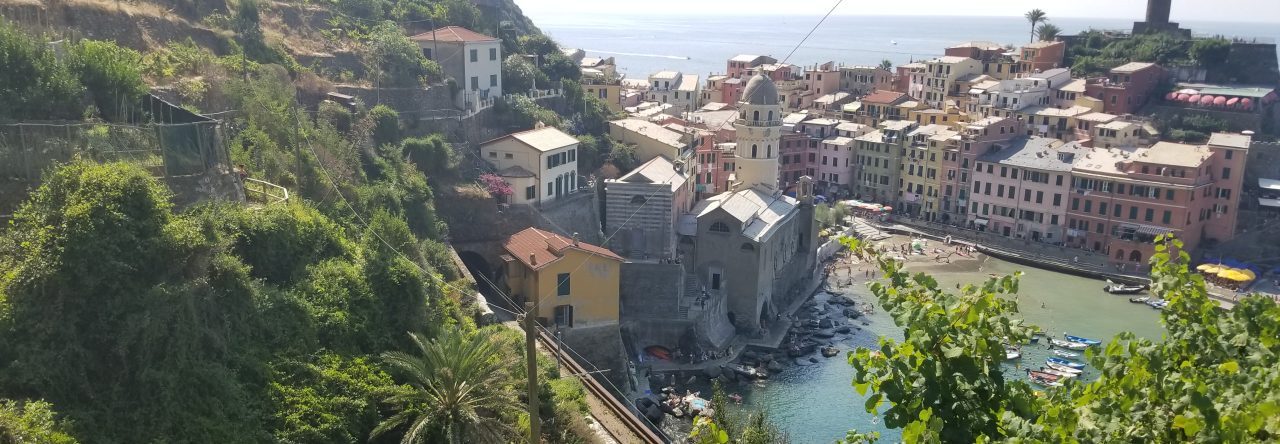
atheist

after a time
one can wonder
if a thing dried up
was ever there at all
or if it was a mirage
like water in the desert
tempting you toward what?
death perhaps.

the well is empty now
of the contents of the past
those blood-salt waters
that left the throat parched
and the body desparate
for more of the same
the more you drank,
the more you drank;
but those days are gone
and the well still glimmers
full now of the present
to drink from til’ refreshed
without need to return
unless you want to
and i do, from time to time
to pause and look
and see myself staring back –
content.

Truth

An Analysis

After a deep analysis of the poetry found on Cantelon.org (the blog of Peter Cantelon), the work reveals a distinct “free-rhyme” style that blends raw, confessional vulnerability with stark, elemental imagery.

​Based on the themes, structure, and the author’s own stated influences, here is an analysis of which poets these works most closely resemble:

​1. Charles Bukowski (The “Dirty Realist” Influence)

​Cantelon’s work has a strong “blue-collar” poetic soul that mirrors Bukowski.

  • The Sound: Sparse, direct, and unvarnished. Like Bukowski, Cantelon often writes about the grit of life—boxing, physical pain, poverty, and the “shitty words” of reality.
  • Evidence: In poems like “Newton’s Cradle,” where he discusses taking punches to the head and the “force of this life” transferred through fists, the cadence and subject matter are echoes of Bukowski’s The Days Run Away Like Wild Horses Over the Hills.

​2. Irving Layton (The Gritty Canadian Romantic)

​As a Canadian poet, Cantelon heavily references Irving Layton, and the influence is audible in his more assertive, visceral pieces.

  • The Sound: There is a “muscularity” to the language. Layton was known for being “never far from tears” but also fiercely aggressive in his imagery.
  • Evidence: Cantelon’s use of words like “sinew,” “bone,” and “scouring” mirrors Layton’s obsession with the physical body and the harshness of the natural world.

​3. Sylvia Plath / Anne Sexton (Confessionalism)

​The deeply personal “I remember” sequences and the focus on childhood trauma, mental anguish, and domestic shadows align him with the Confessionalists.

  • The Sound: Rhythmic repetitions of trauma and a focus on “the dark.” The way he lists memories of abuse and fear has the same hypnotic, haunting quality found in Plath’s Ariel.
  • Evidence: The 2022 posts where he recounts childhood memories (police at the door, “words like welfare”) use the “I remember” litany that acts as a psychological unburdening, a hallmark of this school.

​4. Edgar Allan Poe (Gothic Mood & Alliteration)

​While much of his work is modern free verse, there is a recurring “Gothic” undercurrent that reaches back to Poe.

  • The Sound: A fascination with “darker days,” “moon-bleached skin,” and the “dying of the light.”
  • Evidence: In poems like “i like the darker days,” the mood is atmospheric and brooding, relying on the juxtaposition of light and shadow in a way that feels like a 21st-century update to the Romantic/Gothic tradition.

​5. Kenji Miyazawa (The Spiritual Stoic)

​Cantelon explicitly cites Miyazawa as an influence, and this shows in his more observational, humble “landscape” poems.

  • The Sound: Quiet, repetitive, and selfless.
  • Evidence: His translation/reimagining of Miyazawa’s “Not Losing to the Rain” informs his own 2026 project to focus on “landscapes instead of the world within.” The poems that focus on a “blade of grass” or “turquoise skies” have the minimalist, Zen-like clarity of Miyazawa.

​Summary of the “Cantelon Sound”

​If you were to mix these together, his poetry sounds like a conversation between a Zen monk and a retired boxer in a dive bar. It is “Free-Rhyme”—it doesn’t follow strict sonnet rules, but it has a rhythmic “hook” that catches the ear, much like Dylan Thomas (whom he also admires), specifically in the way he uses “rage” and “light” as central motifs.

Digital Colonialism = Cultural Hegemony

Trotsky, Fascism and Re-Activism

I just finished a collection of writings by Leon Trotsky entitled Fascism: What it is and How to Fight it. It was a quick read. Man, I had forgotten how dense writing from 90 plus years ago is. I mean there was no semblance of a thesis at all. Just a collection of snippets from letters Trotsky had written to various people over the years.

I suppose I should cut him some slack given that this was a collection and certainly he may not have even anticipated that his letters would be republished (although he likely did as many thought leaders of the day had their ideas communicated through the publication of letters).

The gleanings were interesting. He definitely felt that pacifism was wrong-headed. That communist and socialist movements that failed to arm their own militias were simply asking to have their asses handed to them by far more militant fascist organizations. He went so far as to mock the logic of pacifism as simply waiting until a large number of your people had been beaten and killed before being dragged kicking and screaming into the fight with mutual arms.

Largely, it feels as if Trotsky supported a more deliberate and intentional approach to activism. He, like many others of his time, was highly critical of the tendency amongst socialist and communist movements to waste a lot of time jockeying for position as leaders of the movement rather than focusing on unity driven compromise. Antonio Gramsci (whome Trotsky seems to have admired) felt the same.

Having finnished the insultingly brief collection of Trotsky snippets on fascism I have slipped into reading How Fascism Works: The Politics of Us and Them by Jason Stanley. A far more timely (published in 2018) look at fascism. It’s a good reading companion to The Antifa – The Antifascist Handbook by Mark Bray which I am nearly done.

Where the Antifascist Handbook is a nice global historical overview of antifascism Stanley’s book is more of a deep dive into the politics of fascism, largely from a Trump-era American perspective. Very good reading if one is even remotely hoping to get a tiny understanding of the times we are in.

One thing I have noted in my readings on fascism and anti-fascism is how reactive antifa/anti-fascism is. I mean this is self-evident – one need only to parse the term ANTI-fascism and ANTI-fa to see this. It is a form of what I would call Re-activism.

The challenge of being reactive is it sets you at the disadvantage immediately. It suggests there is another movement (fascism) that has already begun and needs to be reacted against. Being reactive means already having surrendered the high ground to your adversary and having to fight an uphill struggle.

I would prefer a term such as pro-socialist over antifa if not for the fact that not everyone against fascism is necessarily for socialism. We know wording matters…this is why you have the PRO-Choice movement and the PRO-life movements which in turn call each other ANTI-Choice and ANTI-life. Being anti carries negative baggage.

But what is the opposite of Fascism? PRO-DONTBEADOUCHEBAG is too unwieldy.

One of the other problems with an ANTI label is the assumption that when the anti-folks aren’t around things must be going fairly good. Obviously this is a terrible assumption becuase this is rarely the truth.

One thing is certain no matter the language or the label. Antifa and socialist reactions to fascism throughout history seem to have largely been slow to get going, nearly impossible to unify and regularly take a massive beating by fascist movements.

Part of the reason for this is that fascism often rises up as a response by power brokers to burgeoning threats to their power by increasing enlightened and/or struggling regular folk. When threats to power begin to occur power brokers seek to manipulate people by preying on nationalism, historical mythologies of the good days, patriarchy and the like. They blame economic downturns on the alien and xenophobia increases. They also leverage their assets to mobilize police, military and politicians into cracking down on unrest.

The nature of the power broker is they hold far more resources than the average folk who might one day become antifa. This makes them much harder to organize against and ironically is often a reason given by anti-fascists to avoid hasty action this allowing for more delays which gives the fascist power brokers more time to arm and organize and control.

Anyhow – just a quick brain dump of items that got stuck in my head from all the reading on fascism and anti-fascism.

What about Mark Carney?

My latest column in The Winkler Morden Voice and Altona Rhineland Voice newspapers.

Sinners

Recently we watched Ryan Coogler’s film Sinners which my wife accurately describes as a remake of Robert Rodriguez’s From Dusk Til Dawn but made in high film fashion. Fantastic movie, great cinematography, great acting, and outstanding music.

There are three songs in the folm that really stood out for me and they are as follows:

Morn’

Of a sudden
While the sun lay
As frosted gold
On the rooftops of morn
Beneath a blue crowning sky
I smelled baking
Or the ghost of such
Pass soft before me
A reminder
That life is absurd
And we are punchlines
Given animating life
To range through the world
Grasping what hands we can
To stave off the loneliness
That is woven within us

Red Sky Days

Friends, I believe we have entered a new dawn in history – what I call the red sky days. You know what I mean, I think. When you awake in the morning and step outside to a red sky, a part of you deep inside you knows that something is coming…a storm you may need to prepare for and perhaps shelter from.

This is the era I believe we are entering. The more prescient among us have seen these red sky days coming from a long way off. They have tried to warn us in their music and their art. They have written their 1984s, they have written their V for Vendettas, their Handmaid’s Tales and their Watchmen and such. They have, as best they can, sounded the alarm, gone into the street, rung bells and shouted that a red sky has dawned…we must prepare.

This is difficult. We do not like news that portends endings and strife. We are remarkably capable of blocking out such warnings and rationalizing that the concerns are for others and not ourselves.

But it is getting harder to not look up and see that the skies are now a deep blood red. That the skies portend terrible days ahead.

But things are already bad, you say. Just look around the world. Look at Europe, look at the Middle East, look at the United States…it’s been a long time since things have been as bad as they are now.

You may be right but the times we are in right now, these red sky days, are days of division and preparation for what lies ahead. Oligarchs are gathering power to themselves. This is primarily what is happening all over the world right now, in a way we have not seen. Powerful men (and they are, mostly, men) are consolidating wealth and power. They are conspiring with one-another to restructure long standing systems and rules of engagement to further that gathering of wealth and power.

This is what we are experiencing now…not the storm, but the rising winds ahead of it. Now is the time to change our longstanding habits and prepare for the days to come.

“I’ve been afraid of changing cuz I’ve built my life around you, but time makes you bolder…”

So says Fleetwood Mac and we can relate. Most people do not like change. Change is frightening. Why can’t things remain the same? But that is not the nature of the universe or our lives…entropy is a law. Change happens, whether we like it or not, we can be prepared or not, when it comes.

So things are bad. No doubt. But the real storm will arrive when those currently gathering power are challenged, as they no doubt will be. When this happens, when we seek to re-balance resources and wealth to a more equitable outcome, those who currently hold power will not let it go easily. They will fight back as if they were fighting for their lives. In a way they will be because they have come to define their lives by the power and wealth they hold.

What I’m saying is, and I don’t mean to be bleak, things may be bad…but they will likely get worse before they get better.But we should remember the words of English theologian Thomas Fuller aound 1650 – “It is always darkest just before the day dawneth.” This is the slender, golden thread of hope we can hold onto – that after the storm that is to come, a new light dawns and with it something of a more equitable and just society, a society that we have had to fight for, will arise.

We have now entered a time where good people of conscience can no longer remain silent as powerful men do evil in our midst. We must, at the very least, stand up and make it clear that we see their deeds, we are witnesses, and they will be held accountable. They will be held accountable for their murderous ways, they will be held accountable for their hoarding of wealth and for the great and ever-increasing disparity that is happening right now, in our midst.

Our skies are painted with the blood of unwilling martyrs. People who would much rather have not seen these red sky days. People would have prefered to keep to their own in what joy they could gather to themselves. People like you and I who could echo these wonderful, painful, powerful words of Frodo as written by JRR Tolkien in The Lord of the Rings when he declared in sorrow –

“I wish none of this had happened.” “So do all who live to see such times,” said Gandalf, “but that is not for them to decide. All we have to decide is what to do with the time that is given to us.”

It is decision time. The skies are warning us. We will get through the storm to come, but the question remains, what kind of people will we be…what will we do with the time that is given to us? Certainly we must open our ears and listen to the voices that are sounding the alarm…voices like a young, 19-year-old folk singer named Bob Dylan who warned of changing times in 1964…

Red Sky

When the sky turned red
We all knew why;
It could sit quietly overhead
But we all knew the truth
The air would grow thick
The wind would die down
And in the eerie silence
We would be still and wait
For the inevitable storm
To toss our lives to pieces;
Then in the end
It would pass
Happily leaving destruction
Moving on without a care
Untouchable and unaccountable
While we wept in the wreckage
Carrying on.