What we know – (Joseph) Harry Samuels is my father. Harry was born Harry Omansky but my grandfather Samuel (Shmuel) Omansky changed the name to Samuels sometime after settling in Canada.
My grandfather was born to Gershon and Keila Umansky. Gershon was anglicized to Harris/Harry in my grandfather’s marriage certificate. According to birth records my great-grandmother Keila’s name was anglicized to Kate. My grandmother’s parents were Vul’f and Sarah (nee Pekker) Gudman.
Lately I’ve been reading a lot about Jewish history as well as fascism (for obvious reasons). While I knew that family members who remained in Europe were likely impacted by the Holocaust (how could they not have been) I have been avoiding doing any deeper research. I’m not sure I wanted to know frankly. Finally I decided I wanted to know what I could, that somehow it was a responsibility to know what could be known. I don’t think I realized the depth to which the Holocaust impacted families…including mine.
Based on all of the research and information I could dig up, here is my family’s story turned into a narrative account as best as I could weave together:
The Umansky-Gudman Epic: A Tale of Two Worlds
In the mid-nineteenth century, the historic river town of Chigirin (Chyhyrin) was home to a vibrant Jewish community of artisans and traders. At the heart of this world were two families destined to be joined by marriage but ultimately divided by history: the Umanskys and the Gudmans.
The Ancestral Home (1870 – 1900)
Gershon (Gersh) Umansky and his wife Keila raised a family anchored in the rhythms of the Pale.
The Pale was a vast territory in the western edge of the Russian Empire where Jews were legally required to live. If you were Jewish in the 19th century, unless you had a special “beyond the Pale” permit (usually reserved for wealthy merchants, certain university graduates, or master artisans), you were forbidden from living in major Russian cities like Moscow or Saint Petersburg.
Gershon and Keila’s eldest son, Shmuel (Samuel – my grandfather), was born in 1876, followed by Moshko, Itzko, and their sister Feiga. As the brothers came of age, they took their places in the town’s civic life – Moshko as a recognized burgher and Itzko as a skilled artisan.
Nearby lived the household of Vul’f and Rivka Gudman. Their eldest daughter, Sarah, grew up alongside the Umansky boys. By the turn of the century, Shmuel and Sarah had decided to seek a future beyond the Russian Empire and beyond the Pale as it were.
The Great Escape and the Secret of 1900
In 1900, the couple reached Glasgow, Scotland. Glasgow was often referred to as “the waiting room” in this era as many would-be emigrants to North America settled here for anywhere from 2-8 years awaiting passage. At this moment, a small but vital deception took place. Sarah was a mere girl of 14 or 15 years old. To satisfy British marriage laws and secure their legal standing, she “aged up” on paper, claiming a birth year of 1879 to appear as a 21-year-old woman of legal majority.
They married in the Gorbals district, where the Cyrillic У of their surname was first interpreted by officials as an “O,” transforming Umansky into Omansky. By 1910, they had crossed the Atlantic first to Montreal, then to Edmonton, then to Winnipeg (where my father was born), and ultimately to Toronto, Canada. The ship they arrived on was called The Laurentian. It seems they may have been joined shortly thereafter by my grandmother Sarah’s sister, Manya (Mary) Gudman.
In the Canadian prairies, the transformation continued. Shmuel became Samuel, and eventually, as stated before, he changed the family name again – from Omansky to Samuels. His son, (Joseph) Harry Samuels, (my father) would carry the anglicized name of his grandfather Gershon, while Harry’s twin sister, Kate, would carry the anglicized name of their grandmother Keila.
The Remainers and the Patriarch’s End
Back in Chigirin, the world was far less forgiving. Vul’f Gudman lived to see the town change under Soviet rule, likely passing away in Chigirin before the war reached its gates. His widow, Rivka, remained with their children – Moshko, Liba, Leizer, Manya, Etel, and Chaim.
They lived side-by-side with the Umansky “remainers.” While Samuel was building a life in Canada, his brothers Moshko and Itzko Umansky, and sister Feiga, remained the pillars of the family in Ukraine. Itzko raised a son, Avraham, who grew up in a world where the old markets and synagogues still stood, unaware that he would soon become the family’s sole witness. There are likely other relatives I have yet to locate.
The Silence of 1941
The end came with what is historically known as the “Holocaust by bullets.” In 1941, Nazi forces and local collaborators rounded up the Jews of Chigirin and led them to the ravines of Krutoy Yar where they were executed.
The Holocaust by Bullets in Chigirin: A Narrative
In the summer of 1941, Chigirin was a quiet town – tired from decades of upheaval, but still recognizable to anyone who had lived there before the revolution. The Jewish families who remained – Gudmans, Umanskys, Pekkers, and many others – had learned to survive the shifting tides of empire, civil war, and Soviet rule. They lived modestly, worked hard, and held onto the rhythms of Jewish life that had shaped the town for generations.
But everything changed when the German army swept into Ukraine.
The Occupation
By August 1941, German troops entered Chigirin. The arrival was swift, almost abrupt, as if the war had suddenly materialized at the edge of town. Soldiers marched through the streets, and with them came new rules – curfews, forced labor, confiscations. Jews were ordered to register, to wear identifying badges, to report for work details. Their homes were searched, their belongings seized, their movements restricted.
People tried to reassure one another. “It will pass,” some said. “The front will move on.” But beneath the surface, fear spread. Rumors drifted in from nearby towns – whispers of shootings, disappearances, entire communities wiped out. Still, many in Chigirin clung to hope. They had survived pogroms before. They had endured the chaos of the civil war. Perhaps this, too, would be survivable.
The Order
Then, in early autumn, the order came from the German Einsatzgruppen .
The Einsatzgruppen were Battalion-sized, mobile killing units of the Security Police and SS Security Service (Schutzstaffel) that followed the German armies into the Soviet Union in June 1941 as part of Operation Barbarossa. .
Jews were told to assemble – some said it was for resettlement, others for registration, still others for labor. The instructions were vague, but the tone was unmistakable: refusal was not an option. Families gathered what they could carry. Some locked their doors carefully, believing they might return. Others sensed the truth but had nowhere to run.
Among them were members of my family from both my grandfather and grandmother’s sides. They stood in the crowd with neighbors they had known all their lives.
The March
Under guard, the Jews of Chigirin were marched out of town. The path led toward Krutoy Yar, a ravine on the outskirts that had once been just another piece of the landscape – steep, quiet, unremarkable. Now it had become something else entirely.
Some people still believed they were being relocated. Others, especially the elderly, walked in silence, understanding more than they said. Parents held their children close. Siblings stayed together. The community moved as one, bound by fear and by the knowledge that they had no power to change what was unfolding.
The Massacre
What happened at Krutoy Yar was part of a pattern repeated across hundreds of towns in Ukraine – the phase of the genocide carried out not in camps, but in fields, ravines, and forests.
In Chigirin, as elsewhere, the killings were carried out by German Einsatzgruppen security forces with the assistance of local auxiliary police. Entire families were murdered together. The town’s Jewish community – present for centuries – was destroyed in a single day.
When the shooting stopped, Chigirin’s Jewish population including my grandmother and grandfather’s families were gone.
Aftermath
In the weeks that followed, the town fell silent. Jewish homes were emptied, their contents taken or redistributed. The synagogue stood abandoned. The cemetery, once tended with care, became overgrown and eventually destroyed. Today it no longer exists. The ravine at Krutoy Yar held the remains of hundreds, but no marker, no memorial, no sign of the lives that had ended there. Ravines or Yar were popular killing locations for the Nazis. Another such horrific atrocity occured at Babyn Yar on the outskirts of Kyiv where more than 1,000 Jews were murdered.

After the war, Soviet investigators documented the massacre, but individual graves were never marked. The names of the victims survived only through the memories of the few who escaped – soldiers who had been drafted before the Germans arrived, evacuees who had fled eastward, and survivors like Avraham Umansky, who later recorded the names of his father, brother, and extended family in Pages of Remembrance at the Holocaust memorial of Yad Vashem so they would not be forgotten.
The End of a Community
The Holocaust by Bullets in Chigirin was not just an atrocity – it was the erasure of an entire world. The Gudman siblings who stayed, the Umanskys who remained, the elderly mothers who could not flee – all were lost. The Jewish community that had shaped the town for generations vanished in a single season.
Only those who had left before the war – like my grandmother Sarah and her husband Shmuel (Samuel) or Avraham – carried the lineage forward. Their departure, once simply a family decision, became the dividing line between survival and annihilation.
Today, through the reconstruction of their stories, the people of Chigirin live again – not as names on a list, but as part of a narrative that restores their humanity and honors their memory.
These are the names of my relatives who died in a massacre as part of the holocaust:
- Gershon and Keila Umansky (my great grandparents), elderly and defenseless, were murdered.
- Itzko and Moshko Umansky (my great uncles), and their sister Feiga (my great aunt), were murdered.
- Rivka Gudman (my great grandmother) and her children Moshko, Liba, Leizer, Etel and Chaim were murdered.
- Mikhail, Itzko’s son and Shmuel’s nephew, was murdered.
The Witness and the Legacy
Two men left, carrying forward the memory: My grandfather Shmuel, safe in Canada under the name Omansky/Samuels, and Avraham, Itzko’s son, who survived the war’s fire and eventually moved to Israel.
In May 1991, fifty years after the slaughter, Avraham sat at Yad Vashem in Israel. He filled out Pages of Testimony for his father, his brother, and his Gudman aunts and uncles. He recorded the names of Vul’f and Rivka, and Gershon and Keila, ensuring that even though they had no graves, they would have a place in history.
Today, the family’s story is one of total contrast: a flourishing Canadian branch born from an emigrating married couple, a name change, and a silent Ukrainian branch preserved in these words. Through the names Harry and Kate, the spirits of Gershon and Keila live on in a world they could never have imagined.
In 1919 there were 3,100 Jews living in Chigirin…today there are none.
I’ve written these words because the names in this story matter. The names of my relatives who were murdered during the Holocaust. People whose futures were destroyed along with any future descendants. They matter. Their history matters. Their story matters. There is no cemetery with their names on headstones…all they have is us to ensure they are never forgotten.
This is not the end.
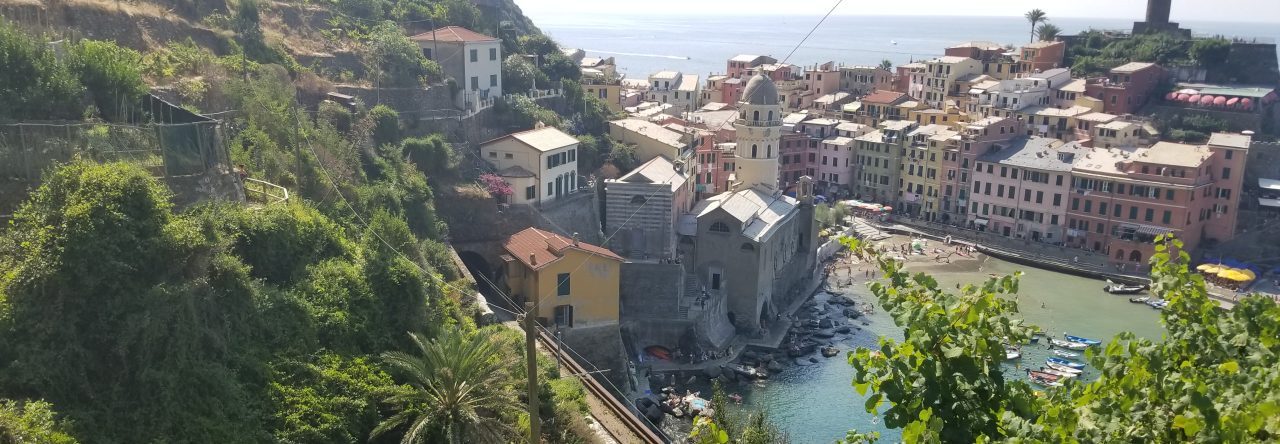
Pictures of Chigirin around 1900 taken from Chigirin | Ukraine Jewish Heritage: History of Jewish communities in Ukraine


Research Details:
Children of Gershon and Keila Omansky
- Samuel (Shmuel) Omansky
- Born: 1876
- Note: The primary individual in this lineage who later emigrated to Canada.
- Moshko (Moses) Omansky
- Birth Period: Late 1870s/Early 1880s
- Record Context: Appears in later town records (Duma lists) as a “burgher” of Chigirin, consistent with children of this household.
- Itzko (Isaac) Omansky
- Birth Period: Approximately 1882–1884
- Record Context: Listed in the 1897 census and regional artisan records as a son of Gershon.
- Feiga (Fanny) Omanskaya
- Birth Period: Mid-1880s
- Note: Recorded in the birth registers of this DGS as a daughter of Gershon and Keila.
To find the parents of Gershon Omansky and Keila (Kate) Jacobs, we must move back one generation from the 1870s into the Revision Lists (Tax Census) of the 1850s and 1830s.
The Father of Gershon Omansky
Based on the patronymic naming patterns in Chigirin records, Gershon’s father can be identified through the 1858 and 1850 Revision Lists for the Chigirin Jewish Community.
In the 1850 Revision List (DGS 008107842), the primary Umansky household in Chigirin is headed by:
- Shmuel Umansky (born approx. 1795–1805)
- Status: Chigirin Burgher (Townsperson)
Why this fits: Samuel (Shmuel) Omansky (born 1876) was almost certainly named after this grandfather, following the Jewish tradition of naming a child after a deceased paternal ancestor. In the 1850 list, Gershon would likely appear as a young child or teenager in Shmuel’s household.
The Parents of Keila (Kate) Jacobs
Identifying Keila’s parents is slightly more complex because “Jacobs” is an anglicized version of the patronymic Yankelevich (son of Yankel/Jacob). In Chigirin, her father would have been recorded as Yankel (Jacob).
Possible family connections for Keila include:
- Father: Yankel [Surname] — “Jacobs” suggests her father’s given name was Jacob. In Chigirin, common surnames associated with the name Jacob/Yankel that married into the Umansky line include families like the Zhuravskys or Gelfands.
We dig further into the past:
Deciphering 19th-century Russian “Revision List” (census) records can be tricky because they use a specific tabular format. Here is a guide to finding and reading the entry for Shmuel Umansky (Samuel’s grandfather) to confirm the lineage.
Шмуль [Отчество] Уманский (Shmuel [Patronymic] Umansky)
Underneath his name, you will see his sons listed:
- Герш or Гершон (Gersh / Gershon).
- His age in 1850 will likely be listed as a child or teenager, which fits the timeline for him becoming a father to Samuel in 1876.
The Patronymic Clue
Reading Shmuel’s middle name (his father’s name) will take you back to the late 1700s. If Shmuel is listed as Шмуль Абрамович (Shmuel Abramovich), then your 3x Great-Grandfather was Abram Umansky.
My grand mother Sarah’s family goes back as follows based on my great grandparents – her father Wolf Goodman and mother Sarah Goodman:
Parents’ Identity in Cyrillic
- Wolf Goodman: Вольф Гудман (Vol’f Gudman). He is often listed as a “Chigirin Burgher” (Чигиринский мещанин).
- Sarah Goodman (née Pecker): Сарра Пеккер (Sarra Pekker).
Children of Wolf and Sarah Goodman
According to the Jewish Metrical Birth Books for Chigirin (specifically the years 1880–1900 found in DGS 100918025 and 100918026), the following children are recorded for this couple. Note that “Sarah Goodman”, my grandmother (who married Samuel Omansky) appears in these records as the couple’s daughter.

The Pecker (Пеккер) Connection
Finding the name Pecker in Chigirin is significant because the Pecker family was a well-established merchant and artisan family in the Kiev Governorate.
- Sarah’s Father: Based on the patronymic pattern, if Sarah was “Sarra Pecker,” her father’s name was likely Moshko (Moses) or Yankel (Jacob).
The Holocaust and my Family
In the Yad Vashem Central Database of Shoah Victims’ Names, there is a Page of Testimony for Itzko Umansky (also recorded as Itzhak Umansky) that directly connects to the Chigirin branch of your family.
Pages of Testimony are symbolic “tombstones” submitted by relatives to restore the identities of those murdered. The details for Itzko are as follows:
Victim Details: Itzko Umansky
- Full Name: Itzhak (Itzko) Umansky (Ицко Уманский)
- Place of Birth: Chigirin (Chyhyrin), Ukraine.
- Date of Birth: Approximately 1882–1884. This fits the timeline of being a younger brother to your ancestor, Samuel Omansky (born 1876).
- Parents: The testimony confirms he was the son of Gershon Umansky and Keila. This is the definitive link to your lineage.
- Residence: He remained in Chigirin while Samuel emigrated.
- Occupation: Recorded as an artisan/worker in Chigirin.
Circumstances of Death
- Place of Death: Chigirin, Ukraine.
- Date of Death: 1941.
- Details: Itzko was among the Jewish population of Chigirin murdered during the mass executions carried out by the Einsatzgruppen (mobile killing units) and their collaborators following the German occupation of the town in August 1941.
The Submitter: Avraham Umansky
- Relationship: He identifies himself as the son of Itzko Umansky and the brother of Mikhail.
- Significance: This means that while Samuel moved to Canada, his brother Itzko had at least two sons: Mikhail (who died in the Holocaust) and Avraham (who survived).
- The Survival Story: Avraham likely survived by serving in the Red Army or by being evacuated deeper into the Soviet Union (often to Uzbekistan or the Ural Mountains) before the Germans reached Chigirin in August 1941.
Extended Family Victims
Beyond Itzko, the database contains listings for other Umanskys from Chigirin who are likely his children or cousins:
- Mikhail Umansky: Born in Chigirin, son of Itzko. This would be Samuel’s nephew.
- Rachel Umanskaya: A common name in the registers, often listed as a wife or daughter in the Chigirin massacre records.
Historical Context of the Chigirin Massacre
In September and October 1941, the German occupation forces ordered the Jews of Chigirin to assemble. They were marched to the outskirts of the town—specifically to the Krutoy Yar ravine or the local cemetery area—where they were shot. Itzko and his immediate family would have been part of this tragic event.
Alongside my great uncle were his children.
Here are the details from the Yad Vashem Page of Testimony and the Soviet “Extraordinary State Commission” records:
Victim Details: Mikhail Umansky
- Relationship: He was the son of Itzko Umansky and the grandson of Gershon and Keila. This makes him a nephew of your Samuel Omansky.
- Year of Birth: Approximately 1910–1915 in Chigirin.
- Residence: Chigirin, Ukraine.
- Marital Status: Records indicate he was married (his wife’s name is often listed as Sora or Basya in related regional lists).
- Circumstances: Mikhail was a young man when the war broke out. While many young Jewish men were conscripted into the Red Army, those who remained in Chigirin to care for elderly parents (like Itzko) were trapped when the town was occupied in August 1941.
The Fate of the Family in Chigirin
The testimony for Mikhail is often linked to the general “Chyhyrin List” of victims.
- Execution Site: He was murdered alongside his father, Itzko, in the autumn of 1941.
- Method: The Jews of Chigirin were taken to a site called Krutoy Yar (a deep ravine on the outskirts of town). They were forced to strip and were executed by gunfire.
- The “Unnamed” Children: Testimony from survivors of the region suggests that Mikhail had young children. While they are often not listed by name in the Yad Vashem database, the Soviet records for Chigirin district simply state “and family” (и семья) next to the names of heads of households, indicating that the entire local branch of the Umansky family was likely extinguished at this time.
My great grandmother Kaeila is also listed at Yad Vashem:
Keila Umansky (Samuel and Itzko’s mother):
- Details: While often listed as a parent on the pages for her children, there are collective testimonies for the elderly who remained in Chigirin. Avraham’s testimony for Itzko confirms Keila as the grandmother, effectively memorializing her through that lineage.
The Gudman Family (My Grandmother’s side)
Further to this my grandmother’s family is listed in Yad Vashem:
The following are the memorial details for the Gudman family members of Chigirin, Ukraine, as recorded in the Yad Vashem database. These records were largely preserved through Pages of Testimony submitted by Avraham Umansky in 1991, who was the nephew of these individuals through his father, Itzko Umansky.
Memorial Details for the Gudman Family
| Name | Parents | Birth Year | Memorial Details |
| Moshko (Moses) Gudman | Vul’f & Rivka | ~1885 | Stayed in Chigirin and was murdered in the 1941 massacre. His page confirms he was the brother of Sarah Goodman and lived in Chigirin until the end. |
| Liba (Leiba) Gudman | Vul’f & Rivka | ~1888 | Recorded as a victim of the 1941 liquidation in Chigirin. Her name is frequently cited alongside Moshko in communal remembrance lists. |
| Chaim Gudman | Vul’f & Rivka | ~1891 | Listed in the Chigirin district victim records. While he appears in birth registers from 1891, he is memorialized as having perished during the Nazi occupation. |
| Rivka Gudman (née Pekker) | — | ~1850s | The matriarch of the family. Her name is recorded on the testimonies for her children, identifying her as a victim who perished alongside her family in Chigirin. |
| Leizer Goodman | Vul’f & Rivka | 1882 | Named after his paternal grandfather. His fate is often grouped with the “Remainers” of the family who did not follow Sarah to Canada. |