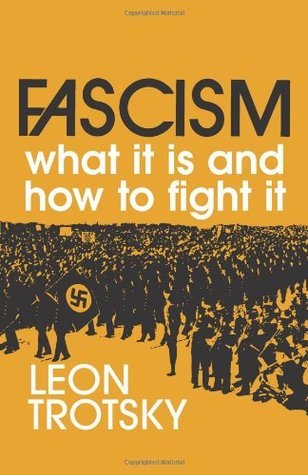
I just finished a collection of writings by Leon Trotsky entitled Fascism: What it is and How to Fight it. It was a quick read. Man, I had forgotten how dense writing from 90 plus years ago is. I mean there was no semblance of a thesis at all. Just a collection of snippets from letters Trotsky had written to various people over the years.
I suppose I should cut him some slack given that this was a collection and certainly he may not have even anticipated that his letters would be republished (although he likely did as many thought leaders of the day had their ideas communicated through the publication of letters).
The gleanings were interesting. He definitely felt that pacifism was wrong-headed. That communist and socialist movements that failed to arm their own militias were simply asking to have their asses handed to them by far more militant fascist organizations. He went so far as to mock the logic of pacifism as simply waiting until a large number of your people had been beaten and killed before being dragged kicking and screaming into the fight with mutual arms.
Largely, it feels as if Trotsky supported a more deliberate and intentional approach to activism. He, like many others of his time, was highly critical of the tendency amongst socialist and communist movements to waste a lot of time jockeying for position as leaders of the movement rather than focusing on unity driven compromise. Antonio Gramsci (whome Trotsky seems to have admired) felt the same.
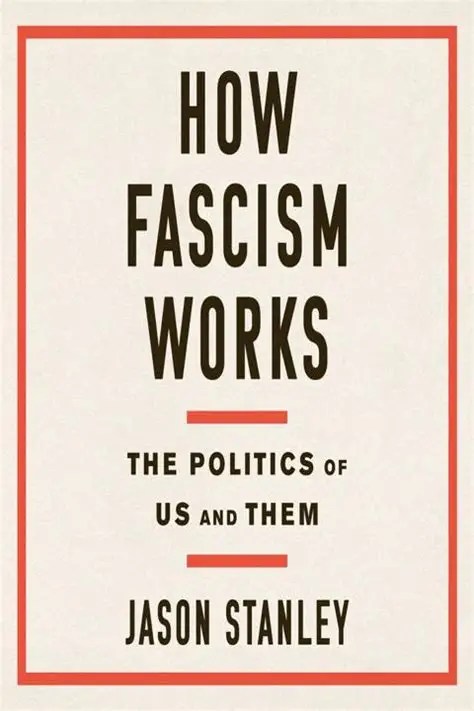
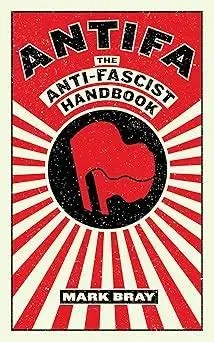
Having finnished the insultingly brief collection of Trotsky snippets on fascism I have slipped into reading How Fascism Works: The Politics of Us and Them by Jason Stanley. A far more timely (published in 2018) look at fascism. It’s a good reading companion to The Antifa – The Antifascist Handbook by Mark Bray which I am nearly done.
Where the Antifascist Handbook is a nice global historical overview of antifascism Stanley’s book is more of a deep dive into the politics of fascism, largely from a Trump-era American perspective. Very good reading if one is even remotely hoping to get a tiny understanding of the times we are in.
One thing I have noted in my readings on fascism and anti-fascism is how reactive antifa/anti-fascism is. I mean this is self-evident – one need only to parse the term ANTI-fascism and ANTI-fa to see this. It is a form of what I would call Re-activism.
The challenge of being reactive is it sets you at the disadvantage immediately. It suggests there is another movement (fascism) that has already begun and needs to be reacted against. Being reactive means already having surrendered the high ground to your adversary and having to fight an uphill struggle.
I would prefer a term such as pro-socialist over antifa if not for the fact that not everyone against fascism is necessarily for socialism. We know wording matters…this is why you have the PRO-Choice movement and the PRO-life movements which in turn call each other ANTI-Choice and ANTI-life. Being anti carries negative baggage.
But what is the opposite of Fascism? PRO-DONTBEADOUCHEBAG is too unwieldy.
One of the other problems with an ANTI label is the assumption that when the anti-folks aren’t around things must be going fairly good. Obviously this is a terrible assumption becuase this is rarely the truth.
One thing is certain no matter the language or the label. Antifa and socialist reactions to fascism throughout history seem to have largely been slow to get going, nearly impossible to unify and regularly take a massive beating by fascist movements.
Part of the reason for this is that fascism often rises up as a response by power brokers to burgeoning threats to their power by increasing enlightened and/or struggling regular folk. When threats to power begin to occur power brokers seek to manipulate people by preying on nationalism, historical mythologies of the good days, patriarchy and the like. They blame economic downturns on the alien and xenophobia increases. They also leverage their assets to mobilize police, military and politicians into cracking down on unrest.
The nature of the power broker is they hold far more resources than the average folk who might one day become antifa. This makes them much harder to organize against and ironically is often a reason given by anti-fascists to avoid hasty action this allowing for more delays which gives the fascist power brokers more time to arm and organize and control.
Anyhow – just a quick brain dump of items that got stuck in my head from all the reading on fascism and anti-fascism.
 Harnessing Chaos