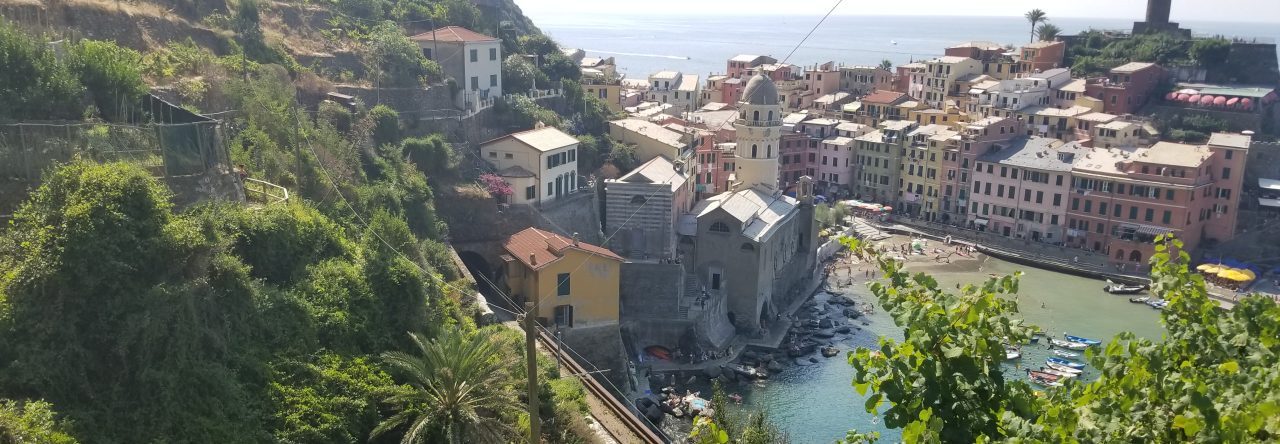
there is a winter’s white
that dances across her cheek;
a cold and beautiful light
that scolds away the dark
soothes my weary bones to sleep;
she’s an unsung song
echoing lovely in the cathedral of my mind
Month: December 2013
The Rabbit
Sometimes I imagine God as a small and winsome rabbit working its way through the great dark and thorny briarpatch that is my life and myself – until, once at the centre, God stops and stays to dwell as a little but pervasive warmth that radiates outward giving me life and making space for others.
safety in numbers
what are the new days
the new year?
just a flat measure
for a round reality
a way to limit
to control
a scary endlessness
let’s wrap eternity
in calendar chains
handcuffs made of clock faces
lend the illusion of control –
safety in numbers
Ekklesia
Ekklesia – a gathering of citizens called out from their homes into some public place…
The word is used 114 times in the New Testament; 111 of those 114 it is used to reference church, churches or congregation, and three times assembly.
We have taken our word church from the Greek word ekklesia and were right to do so. There are many questions that we should ask and re-ask on an on-going basis however and certain points to remember as well.
That which we call church was called into the public square…the place where the local world gathered. Those believers were called into public assembly for some reason and we would do well to remember and understand those reasons. Further to this we must ask ourselves if the current gatherings that call themselves ‘church’ or ekklesia continue in the tradition of being in the public space.
One might argue that the church met in the public sphere in New Testament times because they had nowhere else to meet. However at the time the New Testament is referring to this is not the case – believers continued to meet, pray and worship in the temple as they considered themselves Jews, albeit Jews with a new dispensation, but Jews nonetheless. Further to this the New Testament points out that believers would meet in homes for evening meals in celebration of Jesus Passover dinner and in remembrance of his death and resurrection. They would also pray and worship there.
So then if the church was seeing worship, prayer, praise, teaching and hearing of scripture, etc inside the temple and homes what were they being called out to the public square for?
I would suggest the word ekklesia was applied because these believers were taking all that they were from a faith perspective and bringing it into the world…into the public sphere. They lived their faith in its many and diverse and broken forms compellingly before the world in the public sphere because they were “called out” by God to do so.
Questions must be asked of ourselves in light of this.
Are we doing this today? Is that which we call church being church in the world? Or is that which we call church increasingly requiring the world to come inside? Does the church of the called out ones spend its time ironically calling the world inside? I think it does.
By and large we have turned places of private worship into places where the entire commission of Christ occurs.
Further – one must ask the question – if the ones named for being called out into the public sphere are no longer going out into the public sphere do they still deserve the title of ekklesia? Do we still deserve the title of church?
Most importantly we must ask ourselves if this thing we call church has morphed into a twisted kind of perpetual motion machine that takes believers, propagates primarily through birth, and takes all of the transformative things going into the world brings and pulls them behind walls away from the scrutiny of the world…away from the public sphere?
If so it says to the world, if you really want to know who we are come into our world, come into our private sphere and learn on our terms. Ministry to the world is offered by proxy through designated missionaries. Relationships which must develop naturally in the public sphere are substituted for programs designed to mimic relationship. All that is natural is destroyed in favour of creating small versions of the temple of Israel – that which Christ declared destroyed upon his death in favour of the new ecclesiastic model he inaugurated.
These are difficult questions. Turning the mirror onto ourselves is never easy…especially when the light is turned up to its brightest level. We see every blemish and would prefer to hide it in dim light, indoors. Still I believe if the church, those who are called out, is to survive into the next century it needs to remember what it was and what it is.
Ephesians 5:8-14 says:
“For you were once darkness, but now you are light in the Lord. Live as children of light (for the fruit of the light consists in all goodness, righteousness and truth) and find out what pleases the Lord. Have nothing to do with the fruitless deeds of darkness, but rather expose them. It is shameful even to mention what the disobedient do in secret. But everything exposed by the light becomes visible—and everything that is illuminated becomes a light. his is why it is said:
“Wake up, sleeper,
rise from the dead,
and Christ will shine on you.”
In light of these verses we should ask ourselves why we, the church, the called out ones, have chosen to hide inside, away from the world. It is as if we have built shelters to wait out Armageddon while the world destroys itself instead of giving up our shelter and standing in public with and among the world that, should it burn, we will burn together.
Why have the ones called out into the public sphere built walls for themselves? Ephesians also points out the following in chapter two verses 14-18:
“For he himself is our peace, who has made the two groups one and has destroyed the barrier, the dividing wall of hostility, by setting aside in his flesh the law with its commands and regulations. His purpose was to create in himself one new humanity out of the two, thus making peace, and in one body to reconcile both of them to God through the cross, by which he put to death their hostility. He came and preached peace to you who were far away and peace to those who were near. For through him we both have access to the Father by one Spirit.”
If ekklesia means what it says it means than walls stand in opposition to its very nature. The church should loathe walls and seek always and everywhere to tear them down.
some new life
there is but quiet
and white a cover of snow
just hush and dark night
save soft lamp moon
and belov’d earth below
it is dark in my heart
but some other light,
an outer bright does glow
this eve of Christmas
another truth, a hope
may press me, may show
my saving hope, my God
my love, my Christ to know
that upon my barren soul
some green thing…some new life
may grow
Might Equals Right
Upon what basis do we determine a right?
Where is the empirical foundation upon which rests the right to free speech, the right to security of the person, freedom of religion, freedom of the press, etc?
What is a right in the first place? There are human rights, animal rights, ecological rights…are their any rights that transcend these groups to encompass all?
A human right is a supposed universal value protecting people and groups from certain constraints and against certain attacks.
A most basic right might be the right to life. Still even this most basic right becomes complicated by questions immediately. What is life? At what point is a human considered ‘alive’ and worthy of the right? If a human being takes the life of another is his own right to life forfeit?
The narrative of Cain and Abel is one of the oldest examples we have of a human rights conflict. Cain unjustly and with malice and intent takes the life of his brother Abel. Interestingly God responds not by removing Cain’s right to life but rather by limiting his freedoms in other areas and specifically marking him in such a way that others would not take away his right to life. In this example we find that God’s response (and therefore model of response) to murder is the offer of mercy and grace. There is still punishment but it is designed to limit Cain’s opportunity to murder again and frankly to make a bold statement that while Cain is a murderer God is not. (I will not address the other narratives of God throughout the Bible that seem to have God authorizing and encouraging murder as it extends outside of the scope of this piece).
Today however we do not have a God that descends to Earth to arbitrate such rights conflicts on our behalf. It has been left to us.
In the absence of God humanity in its various and wonderful forms has established human authority to take divine place and arbitrate. Ostensibly people have attempted to exercise impartial and God-like loving judgement but of course this is impossible given our nature in comparison to how we define God (regardless of culture).
We take what we have in terms of our sacred texts and attempt to extract laws and protections but are immediately hampered by our inability to interpret without bias and instead create a conflict laden codex that, while it protects some, destroys the perceived rights of others in the process.
Nevertheless this is generally how it has been for millenia now – culture groups have defined their laws which were created essentially to enshrine certain rights as designated by God(s) (depending upon culture) and maintain those rights which would evolve slowly as a result of jurisprudence over time but still maintain their core essence.
Ultimately these rights could not be contested because the power of God(s) represented by King/Emperor/Ruler stood behind them with all the might of the military behind them and a cultural majority that supported these rights.
And so it has gone for quite a while. Might has served to determine right. Might enshrined by fear and propped up by a cultural majority. Conflict would occur when two empires or kingdoms and their differing rights would run up against one-another and the victor enshrined their rights over the loser…or, as was the case with Rome, allowed the loser to maintain their own rights so long as they did not conflict with the primary rights established by Rome which extended over the entire empire.
There are periods of relative peace but these generally only happen when the power of the ruling class is so large or all-encompassing that the consequences of rebellion far outweigh the potential benefit for the group that might strive in such a direction. Where we are now however is very different. The authority that has enshrined and driven certain rights is diminishing and in such an atmosphere rises an environment of division and, increasingly, the need to “choose sides”.
In the Romantic era with the rise of modernism we saw revolutions throughout Europe which were pre-figured in the Reformation as the lower classes/peasants rose up over an increasingly abused system of laws which enshrined the rights of the rich and powerful. In the Reformation the repressed classes were empowered by knowledge and used, the Bible, the very foundation of the laws that abused them, against their oppressors by re-interpreting (or reforming) it to reveal that the originally intended rights of all people (equality for example) had been diminished or hidden by the avarice of those entrusted to protect those same laws.
With the empowerment of people in the western world through knowledge released in the Reformation there was a re-birth of philosophical inquiry available to anyone. Knowledge was pursued with gusto and embraced by the common person so long as it further supported an equalization of power between the regular classes and those in authority (clergy, royalty, military). This eventually and inevitably led to the overthrow of monarchy in France and Russia followed by the United States whereupon democracies were reborn and rights of equality, liberty and happiness formed the foundation of all rights.
These democracies arose and established/enshrined various rights in the same way all rights had been previously – in the absence of God they were cemented in the power and might of the cultural majority, so established by having violently overthrown the previous regimes.
And thus the cycle has continued.
There has never been (to my knowledge) a society where all cultures and people groups have had their rights equally enforced and protected. There is always a cultural majority whose rights strive for authority over all others. It does so naturally out of an instinct to survive.
Today in the west (Canada, the United States and Europe) we find ourselves in the middle of a revolution. The aging and largely corrupt old regime is falling to pieces around us. Built ostensibly on Judeo/Christian values it is really simply the former modernist post Reformation system that used those values to prop up their own personal and cultural preferences over the old system.
This new revolution does not seek to recycle Judeo/Christian values anew…it seeks to eradicate them completely (something it will find hard to do sine those same original values have sprung from human nature even if the core of them was revealed by God or placed on human hearts by said same God).
In the absence of a system to reform all culture groups or people groups will exercise the power that they have to form the basis of the new system, whatever that may be. Like drops of oil on water, like-minded groups will gravitate toward one-another in an effort to consolidate power and rise to the top of the head whereupon their values will be enforced over all others.
Interestingly this has been going on now for about 100 years or so, slowly and surely. Then on September 11, 2001 something happened to detour the path that the west had been on. Another culture group from the east asserted itself in the actions of a few and conflicted heavily with the west through the crashing of four jets, three into powerful symbols of western authority.
With this event (which I believe will be considered the true beginning of the 21st century and perhaps the third millenia as well) the fading and crumbling edifice of modern western authority saw an opportunity and re-established power by asserting itself and its Judeo/Christian values in staunch opposition to the eastern invaders. By defining the event in broad and sweeping cultural terms and using ancient language such as ‘crusaders’ and ‘infidels’ the Judeo/Christian power-base in the west successfully cast the east and Islam as a common enemy behind that only they could fight. The smaller and emerging western culture groups stopped scrabbling for authority and fell in behind the older and more established leader they were attempting to overthrow in order to fight this new common enemy.
Now 14 years later this historical anomaly is waning and the Judeo/Christian west is facing destruction from within once again so that a new authority might rise, whatever that might look like.
In this cold revolution certain evidences of out with the old and in with, in with..while with whatever can position itself to get sucked into the vaccum first really…are being seen. Old Judeo/Christian abortion laws rooted in an ancient understanding of life have been struck down in favour of nothing right now. Literally nothing. There is no law against abortion of any kind in Canada. This vacuum cannot last forever – sooner or later a cultural perspective will win out and assert its interpretation of right and life into a new codex of laws. The fact that none has yet suggests that there is no such group yet.
Further to this, ancient Judeo/Christian definitions of marriage are being torn down in favour of a broader interpretation. I am not lamenting this but merely attempting to state what is going on.
As each brick is pulled from the old structure the entire edifice becomes weaker and it is only a matter of time before the thing comes crashing down in an uncontrolled fashion.
What will replace it? Some think that whatever it is it has to be better than what we have. Still what we are seeing fall apart has a thread that runs back almost 4,000 years in western human history. We may not like what replaces it. How does one build a new foundation without using the bricks of the old?
Rights. Human rights. Rights, no matter how universal we pretend them to be, no matter how rooted in the trancendent God we believe in – rights have always been established with human might. This will not change although the nature of such power may. Perhaps the next revolution will be won on the power of an idea…intellectual might over sticks and stones…but this takes time and patience and re-education.Make no mistake – in order for one group’s set of rights to win out in the end, other groups must be crushed…history has shown us this; it has shown us that we are not wise enough to develop a system where all perceived rights are protected and enshrined.
As a side note one should see the very revolution we have been in reflected in the popular culture of our day with films like The Matrix, The Hunger Games, A Clockwork Orange, V for Vendetta, Harry Potter, The Lord of the Rings, etc. all focusing on revolutions of sorts; the overcoming of an ancient evil in favour of a new good (or at least anarchy in the case of A Clockwork Orange).
Who In History Should I Hate?
Lately (by this I mean over the course of the past couple of years) I have been increasingly been confronted with a world that wants to dichotmize everything and everyone.
Our culture wants us to make clear distinctions between Good and Evil, Left and Right, Black and White…there is no room for complexity or subtlety. These distinctions or boxes are being applied not simply to systems of thought, politics, organizations but to people as well…and not just people now but historically and outside of our own context.
Recently I posted a cool quote from American and all around historically significant woman Susan B. Anthony which stated “I distrust those people who know so well what God wants them to do, because I notice it always coincides with their own desires…”
After I posted this a friend posted how Susan B. Anthony was not a great person but a racist who likely championed women’s rights so that it would undermine black men’s right to vote.
I don’t know how to respond to these things.
Am I supposed to not like the person? I abhor racism and if she was racist I abhor her racism but I find it difficult to dismiss EVERYTHING a person did because of one aspect of their very complex persona. Susan B. Anthony was a racist…this does not change the fact that I like what she said about people’s knowledge of God.
Martin Luther was a virulent anti-semite but I greatly appreciate his insight into faith and his part in the Reformation not to mention his hymns and translation of the Bible into German.
William Shakespeare wrote The Merchant of Venice which presents one of the most enduring racist stereotypes of Jews ever written. He also wrote Hamlet, Macbeth and King Lear. Must I dismiss the man entirely because of his hate?
Canadian Prime Minister Mackenzie King was a strong leader for the country through WW2. He was also a complete loon who consulted mediums and crystal balls to communicate with his dead dog and mother seeking advice on how to run the country. He would never have been elected today.
I guess what I am saying is that people do horrible things…but this does not make a person horrible. If I were to be judged on the basis of some of the mistakes I have made and perhaps on some of the culturally contextual opinions I hold which seem to work right now then I can tell you there is no hope for me or any like me.
I fear this movement toward an us versus them mentality or perhaps to quote former President Geroge W. Bush the mentality that says “If you’re not with us you’re against us.”
peddler
there –
but for a word
from Yeats, or Browning,
from Donne or Bukowski,
go i…
small peddler of dull fascinations
inspired by the smiths of old
to fashion some trinket in wire
for Sappho mum or pappa Poe
holding forth with child triumph
i know, i know, i know
the old ink’n gods are drunk and dead
they are but sad measures
in my daddy-issues Heracles’ head
but maybe with seven great feats (or seven great beats)
i might be welcomed home
if only the gate would be left ajar
i might sneak in at night…it would be enough
laughlaughlaugh
let’s walk upon the edge –
the edge of eyes and ears;
and tread soft the shadows
cast by others in our way;
let’s dance upon hurled hate,
waltz wildly around cannon-shot words
falling exhausted on each expectation
to stare up at every bright pinprick,
every little jealous, dripping lamp
we hurled as stars to the night skies;
lets turn the pointed poison we swim in
to soul-soothing, heated hot springs
where we might laughlaughlaugh…
laugh ’til sun’s great and steamy rising
tattooed
pen is a hand-held dagger
to stab into my inkwell heart
that i might carve crazed words
into the flesh of the world
secrets tattooed with my black
for God to look in love and notice
 Harnessing Chaos