Law: A Reflection

The law. Lex Mundi. It is very interesting.

Far from being an absolute and clear dividing line between good and evil, right and wrong, law has entered something of a crisis in our post-modern era where questions like “what is evil really?” and “is there really such a thing as wrong?” become more and more dominant.

As always my discussion here will be framed within the lens of who I am. A man of Judeo-Christian faith straddling the gray area between modern and post-modern thinking. What I mean is this is bound to be messy.

The Oxford dictionary defines law as follows:

[mass noun] (often the law) the system of rules which a particular country or community recognizes as regulating the actions of its members and which it may enforce by the imposition of penalties.

The law – created to ensure order by the authority of a people or culture and eroded or changed as culture changes and the authority of said culture changes. Simplistic, I know but work with me.

The law is a necessary expression of order and control designed to ensure a culture continues and develops in a reasonably smooth way. Initially a tool of efficiency encoding morality and ethics so that cultures do not have to re-invent the wheel with each new murder or theft etc. it has, in most instances, become less than efficient as the years and decades and centuries and millenia have weighed it down with amendments and addendum and interpretive rulings etc.

My opinion – there is no such thing as a lawless country. There is no such thing as a lawless person. One might argue that Somalia is a lawless country but I would argue simply that the laws there are essentially safeguarding the rights of a minority of power brokers at the expense of the many who hold no authority.

North American and European law has their foundation in Judeo-Christian values. This is changing of course as culture shifts but the question of course is how is it changing. As the foundational J/C values are removed are they being replaced with anything or is the entire construct of legality at risk of becoming an inverted pyramid at risk of complete collapse?

When God gave a code of law to Israel at Sinai it was not done ex nihilo, that is, out of nothing. Israel was not a lawless people. Israel had a law of its own based on its history and culture and that law would have been very similar to other Semitic peoples of the middle east at the time. There are shadows of Israel’s old laws in scripture that closely mirror the code of Hammurabi for instance.

The principal of retributive justice seen in the phrase “an eye for an eye…” was clearly encoded in Babylon around 1,700 B.C. while Biblical scholars generally agree the Torah (which means law) was encoded roughly 600-450 B.C. although it was clearly an oral tradition for longer.

So God enters Israel’s timeline (or appears to but really God had been there all along) and offers a new interpretation of human law. God offers an interpretation that is based on God’s holiness because Israel, having been chosen by God to become a human reflection of Godself to the world, thus receives God’s imputed holiness and its laws must reflect this.

So we have a law now in the process of being redeemed. We also are given a law with a new purpose. Rather than simply act as a dividing line between right and wrong, good and evil, Israel’s law is meant to be a beacon to point to something eternal and beyond this world. It is meant to point to an absolute.

No longer is the law meant to point to a need for external order it is also meant to point to an internal need. The law serves the purpose of the tree of knowledge in the garden of eden story from Genesis. It gives us an awareness that there is right and wrong, good and evil, that is not dependent upon our culture and desires (unlike what happened in the garden story when the fruit opened humanity’s eyes to good and evil but drove God to a distance hence making us the arbiters of the dividing line between the two) but beyond us in a seemingly unreachable place – the heart of God.

In Romans 7:4-12 the apostle Paul says:

So, my brothers and sisters, you also died to the law through the body of Christ, that you might belong to another, to him who was raised from the dead, in order that we might bear fruit for God. For when we were in the realm of the flesh, the sinful passions aroused by the law were at work in us, so that we bore fruit for death. But now, by dying to what once bound us, we have been released from the law so that we serve in the new way of the Spirit, and not in the old way of the written code. 

What shall we say, then? Is the law sinful? Certainly not! Nevertheless, I would not have known what sin was had it not been for the law. For I would not have known what coveting really was if the law had not said, “You shall not covet.” But sin, seizing the opportunity afforded by the commandment, produced in me every kind of coveting. For apart from the law, sin was dead. Once I was alive apart from the law; but when the commandment came, sin sprang to life and I died. I found that the very commandment that was intended to bring life actually brought death. For sin, seizing the opportunity afforded by the commandment, deceived me, and through the commandment put me to death. So then, the law is holy, and the commandment is holy, righteous and good.

The law creates a new awareness…that we are not the true source of what is right and what is wrong. That holiness outside ourselves is and that initial awareness creates despair and causes us to cry out “who than can be saved?” In that state of yearning our own spirit which is of the same fabric as God’s seeks salvation and finds it in this same God.

But I digress.

Israel’s law was redefined on Sinai in the same way American law was redefined with the Constitution. It is not as if there was no law in the American colony before 1787 when it was adopted; there was law but it was British. The Constitution enshrined a new, redefined law based upon principles of a republic and against a monarchy.

Still as wonderful as the law has been, particularly in light of its basis in God’s revealed will it is still time and culture bound. Not, of course, because God is limited but because we are. We change, our culture and values change with new technologies, greater awareness of the world around us, new forms of power etc. God reveals God’s law into a time-bound, culture-bound, language specific context and then it is up to people to interpret and adapt the law appropriate to God’s holiness. The only way to do this is to remain close to the source of the law but of course Israel and everybody since pretty much messed that up within seconds of the revelation.

We are now, here in the west, sailing through time in a ship of law that veered a half-degree off course. This slight course change seems reasonable until you project it across thousands of years and come to realize that we are likely nowhere near where we should be at this point.

We find ourselves in the middle of an unknown legal ocean, captain absent and officers squabbling among themselves over where to go and how to get there while the crew threatens mutiny in their increasing restlessness.

Some would say – simply go back to the beginning and start again. This sounds good but it is not possible. We are lost. There is no way back and when we left port we were much different from who we are now. No – we must forge ahead somehow from where we are and do the best we can but I would suggest it would be a mistake to forget the original purpose and intent of the law as we have it. To forget the ethical and moral intentions of the law and deny the absolute God who sought to redefine it for holy purposes would leave us adrift in a hot windless sea for a long time with the law becoming a dead albatross around our necks weighing us down.

We must do the one thing our culture is absolutely trying not to do – look to God and pray for grace and interpret our laws accordingly. How this looks practically I cannot say but it would impact everything.

Do not suppose such a move would create either a Republican or Conservative promised land either. God is neither of these things though God’s persona has been successfully redefined and co-opted by both in recent years to look the part. Of course every time one seeks to speak for God one invariably paints their own face and creates an idol be they left or right.

No matter what, the law will continue to be defined, redefined, and interpreted and the outcome will largely depend upon the people who are doing the interpreting. Since there is no way people can separate themselves from their biases and beliefs (and we all have them) it is these things that will be the ultimate determinants in how our law looks in the future.
silence

silence
is not golden
nor silver
it is an empty balloon
laying on the floor
it is unused potential
it is shadows moving
‘cross the light
it is light moving
‘cross the shadows
silence is a mute’s song
sung in the dark

Silence by Shusaku Endo: A Review

I have stopped describing things as “the best I have ever read/heard/seen” because things change, I change, and this is usually not a reliable statement given time. That being said I can say with certainty that Shusaku Endo’s novel Silence is certainly one of the most impactful books I have ever read and, in one read, has become foundational for me.

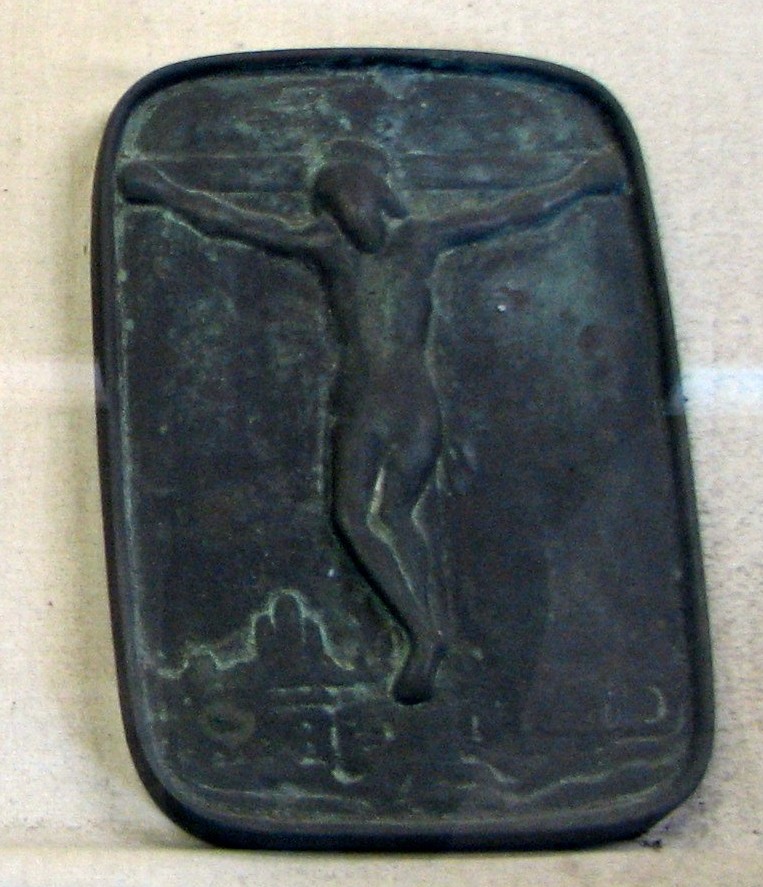
The book was written after Endo, who was born in Tokyo, contemplated an historical artifact called a Fumie. A fumie is an iconic image of Christ that was part of Japanese Christian worship in the 17th century. While considering the image Endo learned that it had been blackened by the feet of numerous Japanese Christians who had trod upon it to apostatize their faith after it became illegal. Endo wondered whether he, under similar circumstance, would remain strong or walk on the fumie. Out these considerations arose the novel silence.

Silence is historical fiction set in 17th century Japan and follows the Portuguese Jesuit Fr. Sebastian Rodrigues as he undertakes a journey to Japan to determine what is happening to the Christian community, previous missionaries and what can be done to help.

Ultimately the novel, though set almost 400 years in the past, is one of modern sensibility and style. There is much that is reminiscent of French existential literature like Sartre and Camus as Endo delves deeply into the mind of one who questions one of the core reasons people lose faith – the seeming silence of God in the face of incredible suffering.

The journey through Silence is powerful, poignant and painful. Endo masterfully crafts a very personal protagonist whom we come to love and develop certain expectations of…in so doing Endo inevitably guides the reader on a journey through their own beliefs, conceptions and misconceptions about themselves.

The novel is simply unforgettable and the heart-wrenching. The work of a true master artist I believe it should be considered a “must read”. It will be interesting to see how Martin Scorcese interprets it in his coming film based on the novel.

P.S. To any who would like to borrow my copy – I am sorry – I value this so much I won’t be lending it out but you can find it at Amazon.

Fumie of Jesus on the cross

Men

“Men are born in two categories: the strong and the weak, the saints and the commonplace, the heroes and those who respect them. In the time of persecution the strong are burnt in the flames and drowned in the sea; but the weak, like Kichijiro, lead a vagabond life in the mountains. As for you (I now spoke to myself) which category do you belong to? Were it not for the consciousness of your priesthood and your pride, perhaps you like Kichijiro would trample on the image of Christ.”

“Repeating the prayer again and again he tried wildly to distract his attention; but the prayer would not tranquilize his agonized heart. ‘Lord, why are you silent? Why are you always silent…?'”

– Shusaku Endo, Silence

Shusaku Endo

Reading Silence by the Japanese author Shusaku Endo and finding it powerful.

“But Christ did not die for the good and beautiful. It is easy enough to die for the good and beautiful; the hard thing is to die for the miserable and corrupt.”

and later…

“I feel the oppressive weight in my heart of those last stammering words of Kichijiro on the morning of his departure: ‘Why has Deus Sama imposed this suffering upon us? And then the resentment in those eyes he had turned upon me. ‘Father’, he had said, ‘What evil have we done?’

The silence of God. Already 20 years had passed since the persecution broke out; the black soil of Japan has been filled with the lament of so many Christians; the red blood of priests has flowed profusely; the walls of the churches have fallen down; and in the face of this terrible and merciless sacrifice offered up to Him God has remained silent. This was the problem that lay behind the plaintive question of Kichijiro.”

The book asks many questions. It points out something about human nature as well. It suggests that we really do not know who we are until confronted with who we are. That we really do not know who we are until the moment of crisis – and sometimes not even then.

That some of us may believe ourselves to be paragons of virtue, strength, grace and forgiveness, while others of us see ourselves as utterly corrupt, broken, weak and incapable of any good thing, still others somewhere in the middle and a blissful few who have chosen not to look ahead have never asked themselves about themselves and thus will have no clue until the moment shockingly or otherwise defines them.

Still in the moment when we learn a little about ourselves we are encouraged or we are laid flat on our backs by the reality of our weakness. In that weakness we can chose to wonder at a God who manages to love us despite ourselves or we can do the more common thing – deny our weakness, cling to a phantom of strength and redefine the world around us in unnaturally bent ways that force our illusions to  fit somehow – however cramped they feel.

In the midst of it all is God…this God who looks on most often in silence forcing his creation to create his voice out of wilderness and wild interior voices. This God who remains powerful in our suffering because he is one with it somehow in a way we cannot understand but in a way that cleanses, heals and saves nonetheless whether we like it or not.

How does one act before this God? How does one be in the world with this God ever-present but never-present? How do we not tear one-another apart in the tension of this place? What holds us back but the invisible, loving, all-powerful hand of a great eternal love…

i do not weep

I do not weep
not in barren places
nor lush
nor temperate climes between
i do not weep

no water-gouged runnels
from eye to chin
no tell-tale sags beneath
those gravity loving sacks
i do not weep

while on occassion there may occur
some flash flood folly
to wash away the grit of it all
like the desert storms it is gone
gone before it falls
soaked by a dry sandy heart
evaporated into the heat and vanished
as if it never were

i do not weep

it is not a case of cannot
nor stubborn faithless will not
simply granite-coursed veins
hard arteries and empty wells
i do not weep

be it un-grasped fatal flaw
well-loved loss of the necessary
be it the absence of a needful thing
i am not sad, nor filled with loss
i do not weep

but i move from time to time
am moved once in a while
ahead…always ahead
by lubricious locomotion
by self-impelled notions
i reach for God and I and others
or I and God and others
or God and others and I

but

i do not weep

Pinterest: Wandering Alone in a Wilderness of Women

Ok – so I cannot even remember how I heard about Pinterest, all I remember is thinking – “hey – cool idea…a virtual bulletin board to store up cool crap I find and to see other people’s cool crap”.

I joined Pinterest several months ago and it did not take me long to notice that I am one of the few guys using it. The whole thing seems like a virtual ladyfest. The standard questions start flying through my mind in rapid fire succession – whydoilikepinterest? wherearealltheotherguys? shouldibeconcerned?

The answers to those came later – itscool, idon’tknow, probablynot.

There is nothing gender specific about Pinterest. It is a neutral techspace waiting to be filled with stuff. The only thing I can come up with about why women use it more than men is that it satisfies the nesting instinct and it is inherently social. Men tend not to be that organized and are often inherently anti-social.

So why do I like it?

Well I am a geek for one and tend to try all things tech and Pinterest is certainly tech-cool. I was also raised by a pack of women (mother and sisters) and may have been infected by some of the gentler gender’s afflictions like an appreciation for social networking. Beyond that I cannot say.

Don’t get me wrong I have found other men on Pinterest and theorize that there may be dozens out there amidst the millions of ladies. Small, rare islands of testosterone floating aimlessly in a sea of estrogen.

I have thought about creating a board called ‘Boobs’ or ‘T&A’ to man-up the place but given the primary population this would probably be about as wise as jumping into shark infested waters with raw steaks tied around my neck. As a compromise I have created a ‘Beer’ board since I love beer and for some odd reason most women don’t.

As someone who likes to cook what I eat Pinterest has also been a great place to discover and save great food/recipe ideas too.

To me Pinterest is a little like the kitchen junk drawer. You know which one I mean…the drawer where you dump a pile of seemingly random things but not so random that you don’t know what is in there. Each board I create on Pinterest is like a themed junk drawer. Food is just a bunch of food related stuff – not more organized than that. I like that.

At the end of the day Pinterest is a way of visually keeping abreast trends and ideas (did I mention that men are also very visual??) and seeing what other people are seeing. It is reasonably unique and I believe will have plenty of staying power. Men will come eventually…it will take time.

For now I will consider myself an advance scout reconnoitering new territory trying to decide if it is inhabited by friend or foe; I suspect the answer is friend and in time the main body of man troops will march in.

The End

the end of all things
seems black
seems night
the end of all things
can be a frightening place
a place to sail over the edge

‘here there be dragons…’

still,
sometimes the end of things
is the beginning of things
the omega can be the alpha
and the setting of the silent sun
heralds golden rise of a bright new one