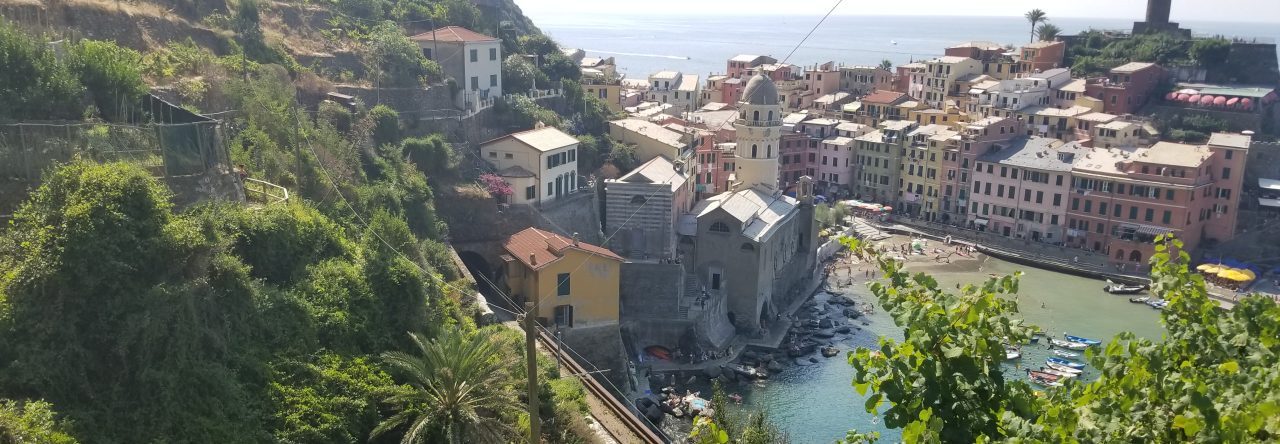
light shines through the green
filters through the leaves
of the veiny vine pressed tight against
the window’s glass
like drama class gels on the spot
casting vibrant life across my floor
bleeding vigorous shadows
that I would stand in –
a chlorophyll baptism
for life everlasting…
Month: June 2011
The Authenticity of Christ
I have, from time to time, heard and been heard saying in fact, that it is difficult to find the one’s who need Christ in a small community. This is lightly veiled code for the challenge of finding the poor so that one can minister to them. In the urban environments like Toronto and Winnipeg etc. the poor are easy to find because they wear the uniform of brokenness out in public – unkempt, torn, dirty clothing, and outstretched hands to beg with.
In a small town they seem to hide or are non-existent. They are the working poor who do not let you know their circumstance due to issues of pride, fear of judgementalism and a myriad of other understandable reasons…and so when ministry teams burst forth from the walls of churches they tend to pack into vans and drive to the city where missions are easy to find and conveniently contain the poor in one location making ministry “simple”.
I wonder sometimes at a few things that have created this cycle of hide and seek ministry that tends to move people outside of their own communities to other cities and other countries to minister. I am guilty of it.
The reality of course is that the sick and sinful are all around us and within us too…it is the state of our existence and we need look no further than the mirror to meet one in need of Christ. This leads me to believe that our often frustrated comments about how challenging it is to minister in a “Christian” community betray a narrow vision of who exactly needs to be ministered to in the first place and what ministry is.
The other thing that has been nagging at me is the apparent need to hunt/find those who need to be ministered to in the first place. We are the body of Christ in the world and if one considers Christ’s ministry one comes to realize that he did not so much seek people out as he was sought out by people.
Don’t get me wrong – that God would deign come to earth in human flesh is the ultimate act of seeking out…one need not read further than Genesis 3:9 which says “But the LORD God called to the man, “Where are you?”” to realize that God seeks us.
From a ministry perspective however we most often find Christ simply available in the world…teaching, preaching, healing, comforting, forgiving, casting out demons and generally wandering through the small rural towns of Israel as people flock to him.
What I learn from this is that the authentic presence of Christ in the world attracts those who need him. It is Christ being Christ in the public sphere that draws us like moths to a flame that we would come and die only to be born again and live truly as humans were intended. It is Christ speaking truth before crowds that causes people to climb rooftops, dig through the ceiling and lower our sick friend into his presence.
This then is our model for ministry but only if we really believe that we, followers such as we are, are the true and real presence of Christ in the world today…his body given up for you…not a metaphor for Christ…REALLY him here and now.
The trick of course is to truly believe that we are, in fact, Christ in the world…to take forgiveness, healing, love, compassion, teaching, preaching and serving into the world with us wherever we go knowing ultimately that it is not us but Christ in us and through us that is at work.
When Christ is authentically present in any community outside of the walls of the church (there is only one report of Christ in the synagogue) and available to all those in need of him – they will come…there will be no illusion that there are none to minister to.
The Perfect Hallelujah
i am looking for
the perfect hallelujah
one that lifts me up
without the pinning nails
one that wraps me tight
but doesn’t leave me entombed
in the cold earth’s womb
i am looking for an unhinged halo
to light my way through the dark
that i can hide when shame rises
to the sound of voices higher than mine
The Heart of a Thing
there was the small greasy restaurant
down Bank Street toward the river
a place where the unknown skinny kid
with adult ideas and aspirations
could go invisible to the world
cuz he knew the best food came
from the rattiest places…
he knew that that heart of a thing
was never what the face would show
bacon, eggs, sausage, hashbrowns
$3 – whocouldbeatthateh?
1 into infinity
sitting alone
washed in moon’s silver
1 divided itself into infinity
only to find itself 0
but 1 just kept smiling
not caring that it didn’t exist
What Am I?
With light fading into twilight as the sun steals below the western horizon painting the cloudbase creamcicle orange I am pondering. So many thoughts floating disorganized in the messy closet of my mind with no real sense or semblance of order.
Out of the mire of it all like a well-preserved body surfacing in a bog comes an idea I have contemplated many times before. At our smallest bits (whatever they are); at our sub-atomic quantum level we are inanimate. There is not a single bit of us at that level that has even a shade of life in it…nothing…
I find it odd that all of these little inanimate bits…these invisible bricks, can be organized in just such a way to become something that contemplates its own existence. I find it mysterious that all these little dead things can become lives that live, love, kill one-another, make more of one-another, laugh, cry, sing, dance and…given the scope of their sentience in the vastness of time and space…worry about things like money and whether other people like them.
We are clearly more than the sum of our parts and this is why scientific inquiry (as much as I truly appreciate it) will never come to grips with who and what we are through its method of backward engineering. We are something more than robots. Of course I believe there is a ghost in the machine – the great imago dei – but it doesn’t lessen the mystery of it all, if anything it magnifies it.
I am this thing, this great doppleganger, this golem of clay made ultimately from nothing – ex nihilo. I am a shadow enclosing a spark that has come from outside of all things and keeps me in a constant state of conflict with myself. I want, like so may other animals to simply eat, sleep, shit, make more of me and die…but another part of me wants more…it wants to rule, to love, to create, to raise the dead, heal the sick…it wants to live forever…it wants to worship.
We are small monstrous gods with our belongings packed into kerchiefs tied to sticks slung over our shoulders and we are on the road between home and nowhere wondering how we got where we are…
It is times like this after darkness has descended and I am alone with my demon thoughts that I feel homesick for wherever I came from…so terribly, achingly homesick.
When is God Good?
It seems like a ridiculous question doesn’t it? God is good…all the time. Still I think it is a reasonable question because it seems like one that is asked all of the time. Of course it is not asked quite so straightforwardly because people are aware of how silly the question really is and frankly I don’t think many people realize they are even asking this question when they do.
The interesting thing about the question is that it is most commonly asked by Christians. It can be seen in the following comments:
– God is so good he answered our prayers and (FILL IN THE BLANK HERE)
– We are blessed because (THE NATURAL DISASTER OF YOUR CHOICE) did not harm us
– God is good because it was another sunny day
– Work was awesome, God is good
Etc. You get the point. I know I can be accused of being a crank here and that there is no validity to my complaint but we, as the body of Christ, are the real presence of Jesus in the world and everything we say about God can be justifiably percieved by those outside of the faith as his words to them.
When we are heard on the news to say “God is good, he protected my son from the flood and brought him back to me alive” we are telling the truth but not the whole truth. The problem is that the parent of another child who died in the flood legitimately asks why God did not choose to protect him or her? Either God is not good (and it would feel that way to the parent of the dead child at the time) or they are being punished for something or worse yet, maybe God is not really there and our fates are at the mercy of chance and the wind as it were.
The reality is that God is good all of the time and we do him and the world a great dis-service by recognizing it only when things go well for us. To speak of God’s goodness in the middle of disaster is not to be blind to pain and suffering but to be a reminder that no darkness is so complete that it snuffs out the light; That there is still good when evil seems ready to completely take over our lives.
We do not celebrate death, pain, darkness and destruction…we are right to weep, wail and mourn…but also to be lighthouses in the midst of the storm guiding others to the safe harbour of this good God. After all it is easy to be thankful and proclaim God’s goodness when things are going well (see the book of Job) but this kind of faith does not transform the world. When we can stand in the midst of our own wreckage and proclaim Him Lord of all and our sole source of comfort…this is the kind of foolishness that changes hearts. It is the gospel that Paul calls foolishness to the Gentiles…but it is a compelling foolishness.
The Aeneid
I have finally finished the Aeneid and can confidently say it is the best epic poem I have read. Of course a lot of credit needs to be given to Jasper Griffen, the translator of the Oxford edition that I have. Frankly I would love to have a parallel Latin/English edition because there are some phrases in the translation that seem too “modern” to my ear.
The poem was finished by the Roman poet Publius Virgilius Maro (more commonly known as Virgil) upon the occasion of his death in 19 B.C. (whether he thought it was done or not). Scholars believe that the work was completed and that Virgil was simply involved in a revising process and so what we have is reasonably what we can expect to have had should he have lived longer.
The poem is divided into 12 books and closely parallels the famous Iliad written by Greek poet Homer around 800 years earlier. The Iliad is largely seen as the cornerstone of Greek culture, helping to cement its place in history and lend credence to its place as a world dominating power.
Virgil sought to do the same for Rome. While there was no doubt that Roman culture was surely the most dominant military culture of all time, Greek culture still dominated in terms of art, philosophy and language. Language is key…a truly dominant culture cannot last if its language does not spread. The Iliad established Greek as the lingua franca of the realm for centuries. Later in history Martin Luther’s famous translation of the Bible into common German led to a stregnthened sense of what it meant to be German and to the modern German language just as Wycliffe’s tranlsation of the Bible into English and later King James’ translation formalized that language and ultimately strengthened the culture.
TANGENT: It could be theorized that the Muslim requirement that the Qua ran only be translated in Arabic will establish Arabic and Arab culture in a way that Greek, Roman, German and English had done for those cultures in the past.
At any rate the context of Virgil’s Rome is important to understanding the poem. When Gaius Octavius Thurinus became the first single person to rule over the Roman empire and adopt the somewhat egotistical name Gaius Julius Ceasar Augustus the ancient republic was dead and the new empire was born (sound familiar – see Star Wars). All of this happened during Virgil’s lifetime and Virgil decided it was the perfect occasion to work to establish Rome and Latin as the dominant culture and language of the world, eclipsing Greek. Like Homer before him Virgil decided to do this by writing an epic about Rome and its Godly roots.
His struggle was that he did not have the benefit that Homer had…the benefit of the distance of time from Achilles and Odysseus which allowed for the mythologizing of the founding of Greece. Virgil wants to do this for Augustus but everyone would be aware of when he was mythologizing (lying) because Augustus feats were the story of current events. To get around this Virgil follows Augustus family claim to the distant Trojans of the era of the Iliad and the historical Trojan figure of Aeneis, the son of Venus (Aphrodite) and essentially creates and Iliad and Odyssey around him and his exploits complete with encounters with Gods, cyclops, harpies, sea monsters and of course the all important epic battles.
For my money the best books are books five, six, eleven and twelve. Book six finds the Aeneis travelling to Hades to solicit advise from his dead father. His journey through the realm very closely mirrors Dante’s journey in his epic poem the Inferno. In fact it is clear that book six of the Aeneid is the model for Hell in Dante’s poem. Dante even has Virgil as his guide through Hell in his poem. It should be noted that since the Inferno has in many ways influenced Christian’s understanding of Hell that the Aeneid then is also a strong influence on our modern understanding of Hell. This is unfortunate. It will take another post dedicated to the similarities between the two poems to do the subject justice.
I think I like book five the best of all the books. In it we find the wandering Trojans resting on the shores of another outcast Trojans new kingdom. To celebrate the respite and re-connection with old brethren a series of games are announced including boat races, archery competition, running, boxing etc. The descriptions of the events are riveting and rival or surpass the best sportscaster’s of the modern era.
In book eleven and twelve we find an epic battle between the native Latins and the Trojans after a treaty is broken. Similar to the battle before Troy a woman is at the centre of things and two warriors fight for her as much as for the honour of their people. On the Trojan front you have Aeneis and for the Latins you have Turnus. Both formidable warriors but Turnus is weighed down by hubris and a fate that is against him.
The events of the Aeneid are designed to show Romans and the world that they are fated to be the greatest race and culture. That all events since its foundation by Aeneis have led to Augustus and therefor all should follow him with complete obedience and devotion.
There are many clever scenes in the Aeneid including the weaving of Augustus himself into the narrative through a clever mechanism. Aeneis at times wonders why he and his people are struggling so much to get to this promised land of Italy. At one point his mother has Vulcan (Hephastus) forge him armour and a great shield upon which is engraved the future history of Rome right up to and including the exploits of his descendant Augustus.
In this Aeneis becomes a Roman version of Abraham, called by the Gods to leave his mother country for a new and better land and establish a people bound to be famous forever. He must act on trust and faith since he will not see this come to completion – but at least he is given a glimpse.
There is much more I could say but frankly you should read the poem. It is fantastic and influence much in modern literature and culture. Let me know if you read it…I want to know what you think.
Relationship is Everything
I no longer call you servants, because a servant does not know his master’s business. Instead, I have called you friends, for everything that I learned from my Father I have made known to you. – John 15:15
A powerful statement from the living God to ones such as us. This is Emannual, God with us, the infinite speaking with the finite and calling them friends and trusted them with his inmost being. Can we really grasp the significance of what this means for us as the body of Christ, the ones called out to express in flesh the being of Christ to the world?
It has been said, and rightly so, that we must develop a personal relationship with Jesus if we are to understand the nature of salvation. I believe this to be accurate but I also understand why it chafes so many people the wrong way.
How are we to develop a personal relationship with an invisible deity who does not speak to us often in a very direct fashion? More importantly still how are we to develop a personal relationship with Jesus when we cannot even develop personal relationships with one-another?
How many of you have a personal relationship with your pastor? How many of you have a personal relationship with the person sitting in the pew in front of you in church on Sunday? How many people can you be safely, honestly, vulnerable with in this world?
If we cannot develop these relationships with one-another, if we cannot model these relationships to one-another – the ones we see, hear and touch – how can we in good conscience tell people to model a personal relationship with Christ?
If the church (that is you and I and every fellow believer) is the body of Christ and the body is a structure of faith than relationship is the mortar that holds it all together. The stronger the mortar, the stronger the integrity of the structure. Let’s carry the metaphor a bit further.
You can have the best bricks, the best plumbing, the best roofing supplies, you can have wood and electrical supplies, you can have doors, and you can have windows…but if you do not have mortar than it is all worthless. The structure will not stand; it has no integrity.
To put it another way you can have a great church building, fantastic sermons, wonderful teaching, the best worship music, the greatest programming for every demographic…but if you do not have genuine relationships (not acquaintanceships) you have nothing. You have a community centre. You have a club. But you do not have the world and life transforming body of Christ witnessing to every nation and working wonders in the midst of a dying planet.
You may protest and lay claim to many relationships…you may protest and say it is not possible to have a relationship with all 400 people in your congregation. However the kind of relationship we’re talking about is called koinonia and is testified to in scripture.
After Peter preached at Pentecost Acts 2:41 says “those who accepted his message were baptized, and about three thousand were added to their number that day.” Immediately afterward we find the first instances of the word koinonia in Acts 2:42 where it says “They devoted themselves to the apostles’ teaching and to fellowship, to the breaking of bread and to prayer.”
It is the word fellowship here that is koinonia in the Greek and I appreciate the following definition – “communion by intimate participation“. Through the power of God’s Spirit Peter preaches and 3,000 people become believers and enter into “intimate participation” with one-another and with God. Real relational Christian community is intimate.
We would like to claim that we cannot have an intimate relationship with more than maybe four or five people but when we encounter 3,000 involved in it we have to stop and consider the possibilities. Our nature is to simply look for reasons that this interpretation is wrong. We might suggest that not all 3,000 had an intimate communion with one-another but groups of four or five throughout the whole did and therefore all did vicariously through these groups.
Perhaps instead of looking for reasons as to why it is not possible (afterall we are told all things are possible…) we should in fact ask what is required of us for this to actually work. As with most things related to Christ we need to do what is contrary to our nature. We need to empty ourselves of the burden of maintaining the relationship first and foremost because it is God’s Spirit that does this and not us. More importantly (and perhaps most frighteningly) we must trust the other.
You have heard it said that trust is earned but I believe Christ teaches us that trust is given, earned or not, and then we act out of that trust and model true and trans-formative relationship. It is a risky thing to trust those who do not earn or necessarily deserve it. It puts us in a position to be hurt…very significantly. After all it requires us to trust sinners…for each of us stands in open opposition to God every second of every day…it is woven into the fibre of our beings – that is the nature of sin.
Christ called the disciples his friends and he knew all but one of them would abandon him at the cross. He called Peter his friend even while he knew he would betray him three times. He called Peter to lead his church despite this. Peter never earned nor deserved such trust – but it was given nonetheless.
Trust is the doorway to relationship. Through trust people will walk into our lives. Some will hurt us again and again and again to test that trust and we are called to continue to give it nevertheless for the sake of Christ and his witness to the world and so ultimately for the sake of the world.
What does trust look like? It looks like many things…it looks like a painfully honest answer to the question of “how are you” even when it comes from someone you don’t know and who likely doesn’t really care. It looks like forgiveness and compassion given again and again and again until you bleed it because you have been hurt deeply by the one who requires it. It looks like a stranger confessing her sins to another because through that permission is given to others to seek forgiveness. Trust looks like perseverance…staying in the lion’s den or the furnace even when it looks like you will be consumed…even if you are consumed. Trust looks like Christ.
Christian relationship and therefore the church itself appear to be built upon contradiction and foolishness but only because we are looking at something of God through human eyes. We trust and enter into painful, broken, ridiculous relationships with others because God did so with us first. As we begin to believe that God trusts us and loves us we can then trust and love ourselves and others and it becomes a wonderful self-reinforcing spiral (stairway if you will) to Heaven…or better still it becomes the paving stones in the Kingdom of God growing right here and now in our midst.
Most difficult of all we must enter into this kind of relationship even when it appears no one else will…even when we are alone in doing so because someone needs to model it. From every corner of the church we are called to model this form of painful, honest, forgiving, compassionate, trans-formative relationship…pastors, teachers, elders, deacons, janitors, pew warmers, PowerPoint operators, musicians, teenagers, seniors, men and women….if we truly desire what we know is possible in community because God said it was, than this must happen.
It starts with one person and can take generations…but it can also happen with 3,000 simultaneously because they’re just foolish enough to believe it can.
CAVEAT: One can take this logic too far and use it to validate or enable an abusive relationship. I have a rule in terms of relationships like one’s relationship to a church for instance and when one should know when to move on. People would ask me “how do I know if I should leave my church and try another one?” and I would respond “If you think your church has problems (and they all do), as part of the church you need to work to remove the problem…when your ability to help your church is less than the harm being done to you in staying…it is time to move on.”
Let me put it another way – you have a new friend who likes to take money from your wallet without your permission. This is abusive. It is incumbent upon you to point this out to new friend…should friend choose to ignore you and continue taking your money it is time for you to move on…you have done what you can in this relationship and should not be expected to continue to allow yourself to be abused.
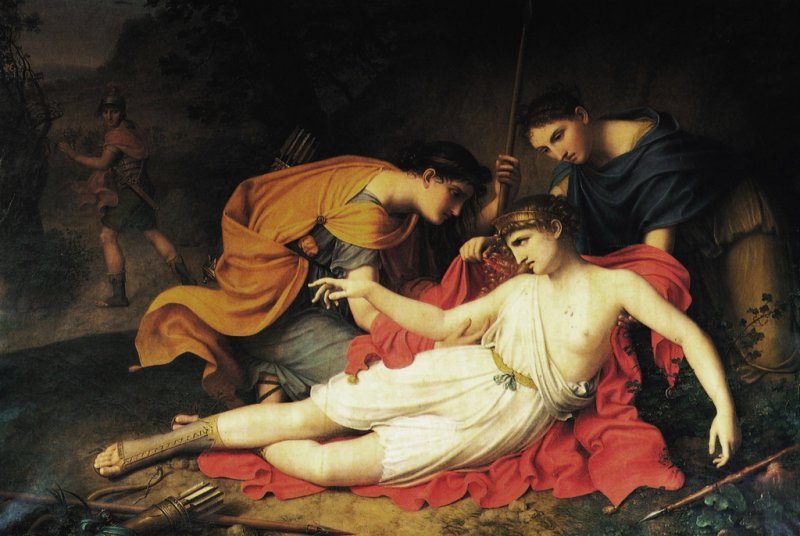
The Death of Camilla
Camilla clad in cotton
runs the course of Italian plains
cutting Trojan princes to the ground
while dark death lusts after her
no thrown spear, no swung ax
nor penetrating shaft of Diana’s arrow
stops the reaching hand of pale rider
grasping for the chaste
grasping for the chased
till lofted javelin tears life away
as moon cries for hunter now hunted
and Latin ladies give loud lament
at the death of Camilla clad in cotton
now a shroud for the barrow
 Harnessing Chaos