there is a well inside of me
a deep inscrutable singularity
it drives a unique insanity
protects a hidden mythology
prevents respite from the heavenly
crushing with unbound gravity
i cannot see
i cannot see
i cannot see
i cannot flee
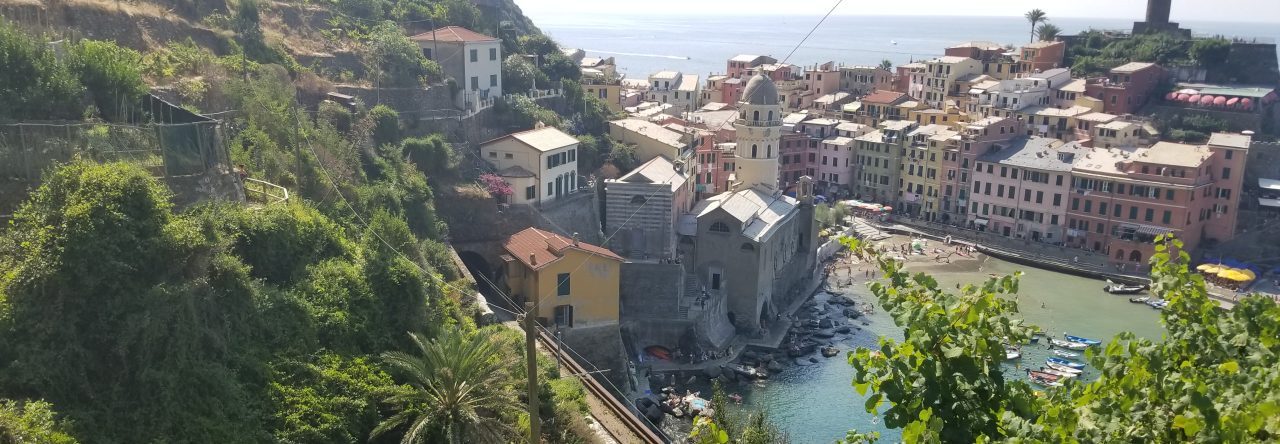
there is a well inside of me
a deep inscrutable singularity
it drives a unique insanity
protects a hidden mythology
prevents respite from the heavenly
crushing with unbound gravity
i cannot see
i cannot see
i cannot see
i cannot flee
there is the hope-filled sun-bleached stone
bright as earth-bound star
blazing beneath heaven’s hot diamond
jewel in royal azure cloak of sky
envy of the crowding silent sentinels
with eaves safe shelter for birds
who weave a garment of song in thanks
surely this place is one of perfect joy
but the smell of death reeks from within
where unseen blackness like India ink
hides old limbs and lost lives
wet dank rot does inhabit the heart
what betrayal is this white-washed place
no welcoming house of endless joy
but a cold collection of moon-blanched bone
tread carefully the narrow wooden rows
between the laden shelves of the gallery
where pot upon pot of glazed clay
sit quietly lost to the boisterous day
walk soft for fear of jostling the crowd
with footing only as sure as their foundation
should they tip and fall without wings to fly
shattering upon the ground with crash as cry
voiceless they press upon your heart
the ceaseless question – why brother, why?
we both were formed in crushing crucible
maker’s hands dug deep to shape our form
but you would dare destroy your kin
a shape now finished from without, from within
here underfoot fast forgotten grit
discarded as a wasteful clod of shit
while you still spinning wet upon the wheel
and no taste of the kiln yet in your mouth
found fragile and fair with paper thin skin
my destruction your curse, your ironic sin
mourn my loss as a long look into the mirror
know there is but one you need to fear
(INSPIRED BY A RUBAIYAT OF OMAR KHAYYAM AS TRANSLATED BY EDWARD FITZGERALD, SUCH AS IT IS)
Empire. It is not a word we hear much these days. Oxford defines empire in part as “an extensive group of states or countries ruled over by a single monarch, an oligarchy, or a sovereign state”.
In the introduction to his translation of the Roman poet Virgil’s epic Aeneid Irish poet and British poet laureate Cecil Day-Lewis (yes he is related to the actor Daniel Day-Lewis as his father) writes that “without bloodshed and destruction empire is impossible”.
While we may no longer hear the word empire much anymore since I suspect people have become quite suspicious of it this does not mean empire does not still abound in many different forms all around us. There are economic empires like Saudi Arabia, technological empires like Microsoft, Apple and Sony, there are financial empires, information empires, and of course there are political empires.
All around us empires are being built, defended, and destroyed and I am wondering – just how true is Day-Lewis’s statement that empire is impossible without bloodshed and destruction. Certainly he would be speaking from the perspective of an Irish man bearing all the history of empire that entails having been occupied and otherwise subject to one conquering power after another (despite his eventual taking of British citizenship). And while Britain is certainly more benevolent than the Vikings the sense of being dominated and exploited would be embedded in such a man’s sensibility. Perhaps the best place to analyse empire is from the outside however for those within, however they may see themselves, ultimately always see themselves as necessary.
“Rome will bring to the world the gifts of peace, justice, order and law;” writes Day-Lewis, “but they can be brought only by force.”
This is a grim prospect for those outside of the empire, whichever empire that may be. History has also proven again and again and again it is a grim prospect for the empire itself eventually…just ask the Greeks, the Romans, the Huns, the Persians, the Ottomans, the Hapsbergs, the British, etc. etc.
There is much bloodshed and destruction in the world today and while this has always been the case (apologies to those who interpret such things with an eschatalogical sadistic pleasure) one wonders if it is because the striving for empire continues unabated. Do we think empire is contradictorily necessary to bring about peace, justice, order and law? Whose peace, justice, order and law are we talking about anyhow and how does one define such thing absolutely in a world that has abandoned absolutes to the junk heap of history? Does this mean our history will be forever dominated by bloodshed and destruction?
Empires are never as simple as people would like to believe (few things are). Some would like to interpret the east-west tumult of today as nothing more than Christianity versus Islam. While there may be shades of this it is far too simplistic a theory to pay any serious attention to.
There are empires at war though. There is an American empire striving to maintain its thinning borders (both geographically and geo-politically) with decreasing resources and increasing and numerous outside threats. There is the emerging Chinese empire that has employed the weapons of economics to it’s imperial advantage. There is the dying Soviet empire still trying to find ways to rise out of the restraining half-dead, half-alive restraints of Russia.
All of these empires have one thing in common – they believe they offered the conquered a better way. In the end however this seems increasingly like thinly veiled code for “the only way” .
Empires view everything and everyone outside of themselves as a threat. There are no friends outside the empire only enemies one needs to keep close.
As Canadians we are an emerging vestige of a dying/dead British Empire. What happens to the remains of an empire? Usually other empires entreat and invade for the sake of expansion of resources designed to shore up and increase power. How does a country like Canada maintain a neutral status in the face of empire? This is a serious line of thinking we need to pursue – no other country on the planet offers as rich and diverse a chest of resources as Canada. Switzerland has been able to keep itself empire free since its establishment in 1291 but at what cost? To maintain such a level of neutrality one must in fact be allies with all (or at least the most powerful) and then neutrality becomes a myth. When you are banker to the nations (some would say launderer) guaranteeing absolute secrecy regarding all dealings you are merely an accomplice and anything noble in your foundation has been lost.
Is it possible to have a world without empire? Can we have a peaceful series of co-existing states? If peace requires destruction and bloodshed the answer is no. If peace requires empire to enforce it the answer is no.
What is the alternative to empire in the 21st century and if there is no alternative which empire will reign supreme?
that sound your hear
as i walk by
is the sound of the cold hard
pouring like blood
from an open wound
it is not spurs
that jingle jangle jingle
there is no
merrily along…
 Flatlander is a unique fusion of word and web and can be found by searching Facebook for Flatlander.
Flatlander Journal of Poetry & Prose was born out of the muse-soaked environment of an extra hot shower on a cool May afternoon.
The founder/publisher Pete Cantelon has periodically been frustrated by the lack of democratic venues for poets and writers of short prose whereas there seem to be countless venues for musicians and visual artists (the artistic aristocracy if you will). While there are certainly a great deal of venues they tend to be dominated by editorial boards who require a certain indescribable (somewhat nauseous) level of highfalutin tone.
While we at Flatlander certainly appreciate our fair share of highfalutin content we feel it should not be at the cost of the everyman and everywoman poet struggling for a level of encouragement via being published.
To that end Flatlander will endeavour to publish most everything that is submitted toward the goal of printing a quarterly version of the journal with poems to be primarily chosen by the audience via Facebook ‘Like’ features.
We would also like to point out that we are focused like a laser solely on the artistic creation and don’t care whatsoever about your race, creed, colour, transparency, sexual orientation, planet of origin, age, political affiliation, or gender regardless of how crazy it just might be.
Poets are encouraged to champion, market and otherwise pester their poem to greatness with whatever means at their humble disposal. We, the editorial board (currently one individual with arguably several distinct personalities) will also make a few choice selections of our own lest democracy run rampant through the journal.
SUBMISSION GUIDELINES: Poems of any length and prose no longer than 5,000 words will be accepted and published. The publisher reserves the right to not publish anything said publisher deems to have the potential get him in hot water so-to-speak.
Visual Art: You are also encouraged to submit original visual art inspired by your work and wither created by yourself or a friend.
Include with your art your name and location.
In order to develop a certain tone to the journal we are currently only accepting submissions from artists born, raised and/or still living in Southern Manitoba deemed to be any community South of Winnipeg’s Perimeter Highway (btw we are painfully aware that “they” have spelled “it” wrong).
A maximum of one poem per week and one story per month will be accepted from individuals.
The act of submitting work to Flatlander will be deemed as giving the journal shared copyright a.k.a. we can do whatever we want with it ad infinitum ad nauseum but so can you.
Please also note that we at Flatlander will not be held responsible should a submission be the plagiarized work of another hapless artist…you’re on your own then.
Flatlander Journal of Poetry & Prose is the copyright of its founder, all rights reserved
I was about six years old when I ran home in tears from the strip mall after being teased for some unknown reason by some older teenagers. I think they may have taken my candy.
I remember 26 year old mum taking me by the hand and storming back to the strip mall where she proceeded to confront said teenagers…most of whom were bigger than she was. Mum was ferocious. She laced into them regardless of whether they were involved or not…I believe that if she had to she would have physically fought every one of them. I could tell they were afraid of her….backing up when she turned her anger on one of them. I was a little frightened too…such is the power of an angry mother.
Well eventually the whole group left and mum bought me candy and I went home in awe of this woman warrior. That is my mum. That is still her to this day. Sacrificial mum who would take on the world to protect her children. Sacrificial mum who would give up everything and more to ensure we had a home and were loved. She taught me to respect and stand in awe of the beautiful strength of women. My mum is my hero and the foundation of my life. A day is not enough for her – she deserves a lifetime.
there is the smell
of ozone in the air
while the small hairs
stand on end
and breath is held
waiting, waiting, waiting
waiting for lightning.
i am afraid of the dark and have been all my life but lately i am wondering if it is not the dark i am afraid of but the emptiness of the dark. perhaps i am more afraid of the isolation…of the loneliness of the dark more than the dark itself. i have written about this before…i theorized that i must be afraid of myself because i was the only thing there. but…i think there is more.
i come from a family that does not like to be alone. generations of men and women who cannot stand the idea of growing old and dying alone. it is genetic somehow. i don’t like the idea of being alone with myself. it forces me to come to terms with who i am and the things i have done etc. of course i know i am never alone and God loves me and Christ has saved me but perhaps i don’t know it enough to not be afraid of the dark…to not be afraid of myself.
how is it that i can be my own ghost spending day after day, night after night, haunting myself? it is a strange thing.
i am my own ghost
haunting the halls of mind
dragging chains along my soul
what a strange doppleganger
living life as my own shadow
Love Wins is the most compelling, compassionate, grace filled presentation of the Gospel I have ever seen. It is a pastoral letter from a concerned leader who wants to offer hope and correct what he sees as a wildly off course perspective other churches and leaders have been offering that has become damaging to the church as a whole and people.
I really, really want to believe the perspective that Bell offers. Too many people have reduced this book to Bell claiming there is no such thing as hell. This is unfair and not true. Bell makes it clear that there is a hell…the real issue people have is how he defines and interprets hell.
Like I said, I REALLY want to believe Bell’s book which is essentially a discourse on the love of God and how it works out through the gospel presentation of heaven, hell, forgiveness, the cross and more. I am not saying I disbelieve or disavow what Bell is saying…I simply need more. The line between truth and heresy is razor thin and Bell tightrope walks it on several occasions but in my opinion never actually falls into heresy.
As a pastoral letter (love letter really) I would give this book 5 out of 5 stars. Unfortunately Bell makes some extraordinary claims in his interpretation of hell. As we have heard before extraordinary claims require extraordinary proof and Bell simply doesn’t offer it.
The first third of the book which focuses on heaven is well backed up by other writers such as N.T. Wright and Randy Alcorn. Most particularly Bell has the solid theological, hermeneutical and exegetical work of Wright holding him aloft throughout. The problem is no such work seems to exist to undergird his interpretation of hell. If there is he does not tell the reader.
The book has no footnotes, no endnotes, no references of any kind and only a very short suggested reading section at the end. It requires more. Bell needs there to be a 700 page extensive theological treatise on hell by Wright to back up his interpretation (or maybe I need that).
The book also fails to answer certain questions. What about the lake of fire prepared for the devil and his angels…what does that mean? What about the God of the Old Testament who orders Israel to kill even the innocent infants of their enemy? These need to be addressed for Bell’s proposal to be more effective (again for me).
In many ways the book reads like a long, well thought out introduction to an as yet unwritten and much longer paper that digs deeply and extensively into all that is proposed. He references Augustine, Origen, Jerome and Luther as defendants but never provides text or footnotes with detail so we simply have to trust he knows what he’s talking about.
The hinge upon which Bell’s interpretation of heaven and hell and thus the character of God’s love all hang is his understanding of the Greek word for forever in the text as it references heaven and hell. The word in Greek is aion and Bell offers a very reasonable and quite compelling case for a better understanding. But – he offers nothing in the way of a word study or research to back up his claim. This is really required.
I understand why none of that is in the text. Bell is writing this for everyone, not theologians and exegetes. The text would become bogged down and the market appeal would shrink so dramatically that the point of writing it would be lost. Still footnotes or references could still be VERY helpful here…especially to those who do not trust Bell.
Due to the lack of theological detail I would give the book a three out of five stars. So the compromise is a four out of five because despite these flaws, and no matter what you think of Bell this book really needs to be read because it forces us to confront our understanding of the gospel, of Christ and of God.
Bell also offers a VERY good presentation and interpretation of the parable of the prodigal son. There are shades of Timothy Keller’s book The Prodigal God to which I suspect Bell owes no small amount (he also recommends Keller’s book in the suggested reading).
Christian or not you really should pick up a copy of this book. It is that compelling.
 Harnessing Chaos